From idea to MVP – Intunio’s prestudy process in practice
A pre-study is about taking an idea that is still unclear and making it sufficiently defined to move forward. This happens through sketches, technical reasoning and early prioritisation. At Intunio, the pre-study marks the start of delivery. Design, technology and priorities are shaped in the same direction, and a first buildable version of the product begins to take form. When a project starts, there is often a clear ambition. What is usually missing are answers to what should be built first, what is technically realistic and which decisions will influence the product over time. The pre-study brings structure to those questions and makes them possible to act on.

Tobias Rydenhag
Head of Design
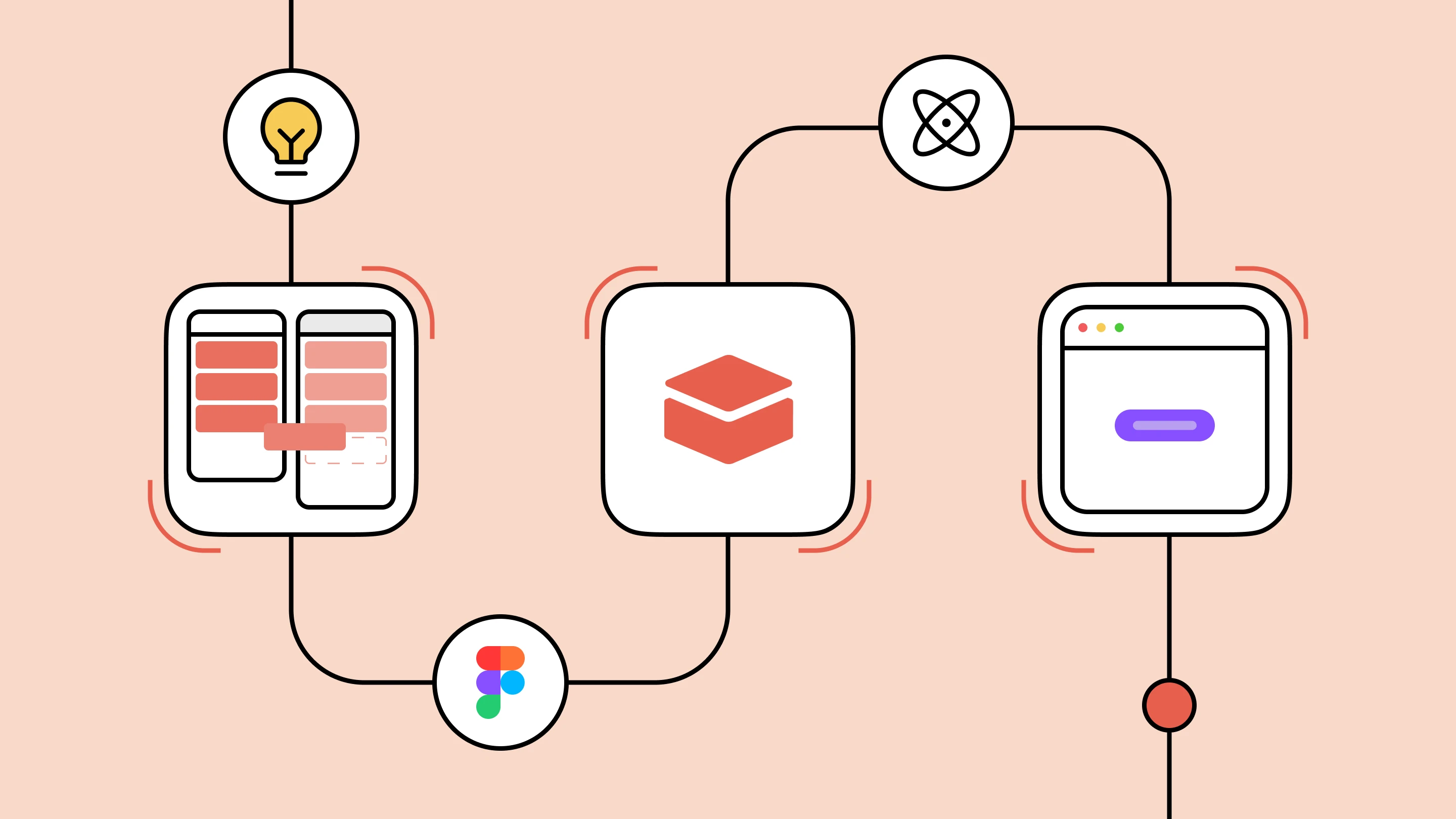
The starting point – from ambition to shared understanding
A prestudy rarely starts from a blank page. There are usually existing goals, hypotheses, and sometimes technical assumptions. There may also be strong opinions about solutions, platforms, or features.
For us at Intunio, the first step is about bringing design, engineering, and the business together around a shared understanding of what we are actually trying to achieve. The focus is on clarifying the problem, the goals, and the constraints, not on locking in solutions.
In practice, this often takes the form of collaborative workshops where different perspectives are explored and aligned. Early on, it becomes clear which parts are well-founded and which are still based on assumptions.
At this stage, the work often results in:
- a shared problem definition and goal formulation
- identified risks and uncertainties
- an initial, high-level boundary of what is reasonable to take forward
Exploration – when ideas become tangible
As direction starts to emerge, the work moves into more concrete exploration. Design is used early to visualise ideas, test flows, and make trade-offs easier to discuss.
We often create design sketches for key views or central parts of the solution. These sketches are not meant to finalise the design, but to serve as a shared discussion artefact. They make it easier to reason about functionality, priorities, and consequences, from both a user and a technical perspective.
Concretely, this may include:
- design sketches for central views or flows
- visualisations used in dialogue with users or internal stakeholders
- early technical considerations directly tied to the design ideas
Technology and architecture as part of the work
In parallel with design exploration, there is active technical work. For us, a prestudy is not complete without early discussions around technology choices and architecture.
This may involve weighing web versus native approaches, reasoning about architecture, integrations, backend solutions, or identifying technical risks and dependencies. The focus is on long-term feasibility, not just getting something to work quickly.
By letting design and technology evolve together, we reduce the risk of solutions that look good but are difficult to build or maintain, and of technical choices that limit the user experience later on.
Scoping – shaping a first buildable version
Over time, the exploration leads to clearer boundaries. What should actually be included in a first version, and what can wait.
For us, an MVP is not about building as little as possible. It is about building the right things in the right order, on a technical foundation that supports continued development. This often means that ideas are deprioritised or postponed, not because they lack value, but because they are not critical in the first step.
The result is a more focused scope that both design and development teams can confidently work from.
The outcome – something you can build on
When a prestudy concludes, there is rarely a final answer. What it does leave behind is a concrete foundation that can be taken forward into real development.
This foundation often includes:
- a clearly scoped MVP
- design sketches for central parts of the solution
- technical recommendations and architectural decisions
- realistic and well-grounded estimates of scope and effort
These are not promises, but a shared starting point for what comes next.
In some cases, the work continues directly into development. In others, it leads to a deliberate decision to adjust direction or wait. Both outcomes are valuable.
MVP as a beginning, not a goal
An MVP is not the destination, but the start of a longer journey. The first version often sets the tone for everything that follows, both technically and organisationally.
A well-run prestudy makes that start calmer and more predictable. It reduces uncertainty, builds alignment, and makes it easier to move forward with the right expectations.
When the process works as intended, it leaves behind something you can genuinely build on. Not just an idea that feels good, but a first step towards a working product.