What's the difference between UX, UI, and product design?
UX, UI, and product design are often used side by side—and sometimes as if they meant the same thing. In some contexts, older role distinctions still remain; in others, new titles have replaced previous ones. The result is often the same set of questions: What is the actual difference? Who is responsible for what? And why does design work sometimes still become fragmented or enter the process too late? This is rarely a theoretical issue. In many projects, confusion around these concepts leads to very real consequences. Design is reduced to surface-level execution, important trade-offs are made without a design perspective, and structural problems are discovered only when they are costly or difficult to fix. In this article, we clarify the difference between UX, UI, and product design in a practical way—not as rigid definitions or separate roles, but as different perspectives and responsibilities in the work of building a product.

Tobias Rydenhag
Head of Design
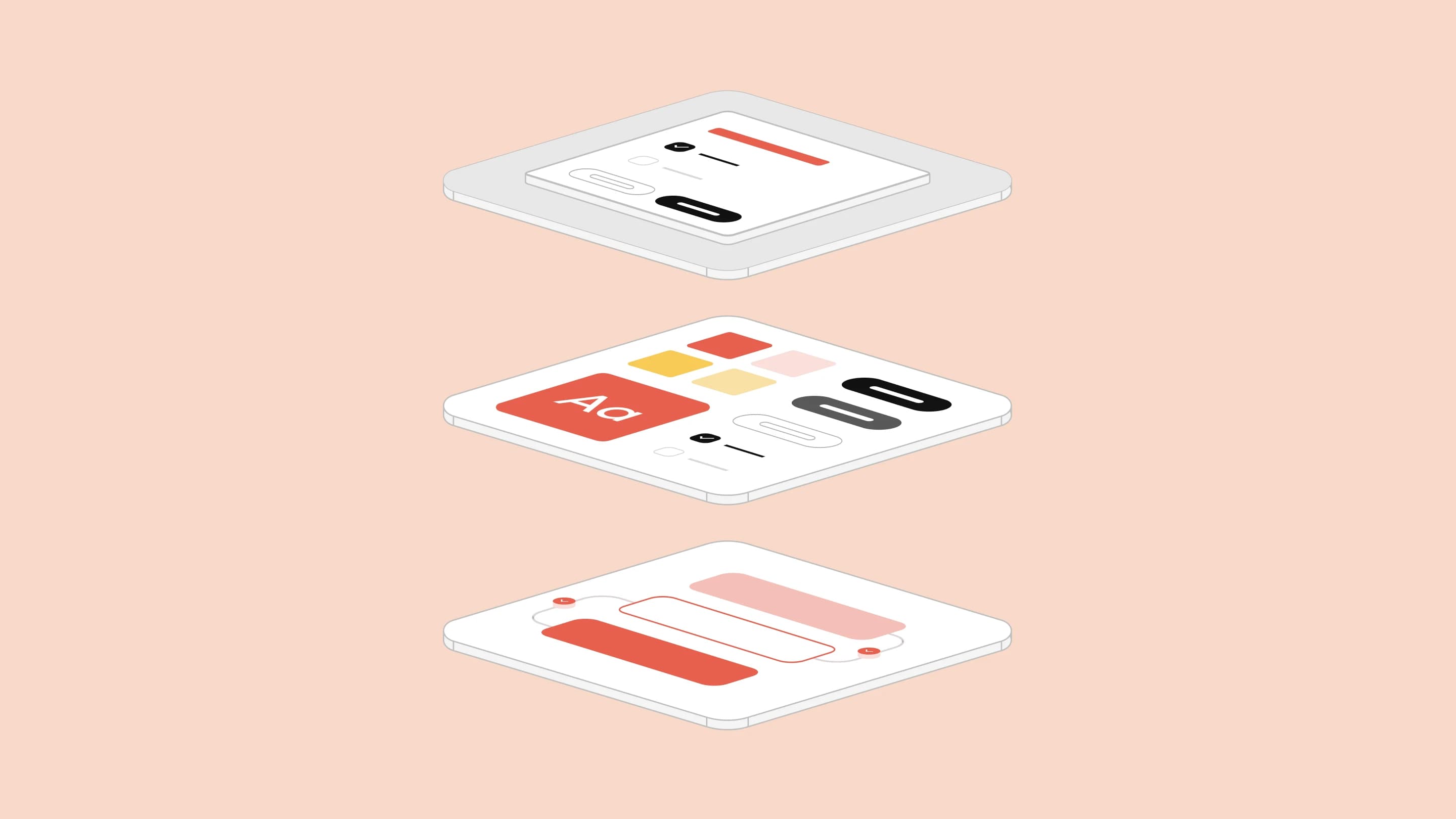
UX, UI, and product design – different perspectives on the same whole
UX – how the product works for people
UX, or user experience, is about how a product works for people in practice. Not just whether it can be used, but whether it is understandable, efficient, and reasonable to work with in its real context.
UX concerns, for example:
- how information is structured
- how flows are connected
- how users understand what is happening and why
- how the system supports decisions and actions
UX is often described in terms of research, analysis, and wireframes. These are important parts of the work, but in practice UX is an ongoing responsibility for ensuring that the product actually works in users’ everyday lives.
That is why UX is rarely ever “done.” It is a perspective that needs to be present throughout the entire development process—from early decisions to continuous improvement.
UI – how the product communicates and is used
UI, or user interface, is what users see and interact with. Layout, typography, color, contrast, hierarchy, feedback, and different interface states all belong here.
A well-designed UI:
- makes it clear what matters right now
- helps users do the right thing without having to think too much
- shows what the system is doing and why
- creates recognition and consistency over time
UI is sometimes described as “the visual layer.” That is a simplification. UI is highly functional. An unclear interface can make an otherwise solid structure difficult to use, while a clear UI can reduce errors, improve efficiency, and build trust.
In products that are used frequently or intensively, UI quickly becomes critical to perceived quality and confidence.
Product design – responsibility for the whole
Product design is today often used as a unifying term for design work that spans both UX and UI, with a clearer responsibility for the product as a whole.
It is not a new isolated discipline, but a broader responsibility where user needs, business goals, and technical constraints are weighed together in real decisions.
Product design typically involves:
- understanding user needs in relation to business objectives
- accounting for technical constraints and opportunities
- making trade-offs that hold up over time
- taking responsibility for how the parts work together
It is less a specific method and more a responsibility perspective. In practice, this often means that the same designer moves between analysis, structure, interaction, and detail—depending on what the product needs at a given moment.
When theory meets reality
In theory, design work is often described as a clear sequence: first UX, then UI.
In practice, it rarely works that way.
UX, UI, and product decisions continuously influence one another. New insights reshape structure. Technical constraints affect interaction. Business decisions have consequences in the interface.
When design directly affects how people work or make decisions, these relationships become especially clear. In advanced or business-critical products, the interface often functions as a working tool or decision support system. In those cases, design cannot simply be “added” at the end.
Small ambiguities can have a large impact—on efficiency, quality, or trust—whether the product is an internal system, a professional tool, or a frequently used consumer application.
When UX, UI, and product perspectives are handled separately in the process, late-stage adjustments and compromises often follow—many of which could have been avoided.
Common misconceptions
“UX is research, UI is visuals.”
When structural issues are not addressed early, teams often try to fix them visually later. That rarely works.
“We only need UI right now.”
Often a sign that important UX and product questions remain unanswered, but there is no time or mandate to address them properly.
Product design as a title without responsibility.
When design responsibility does not come with authority, key decisions are made outside the design process.
More titles do not create clarity.
The fact that the industry uses many different titles for similar responsibilities says more about how cross-disciplinary design work is than about real differences in practice.
How we approach design responsibility at Intunio
At Intunio, we see UX, UI, and product design as different perspectives and responsibilities within design work—not as isolated parts of the process.
Our designers work across the full spectrum:
- analysis and structure
- interaction and visual clarity
- responsibility for how the whole works over time
This does not mean everyone does everything all the time. It means that responsibility and focus adapt to the needs of the product. In some situations, deep analysis is required. In others, interface details are decisive. Often, both perspectives need to be present at the same time.
In products with high complexity, many dependencies, or where small mistakes can have serious consequences, this approach becomes especially important. There, design is not an add-on—it is an integral part of how the product works.
A final perspective
The difference between UX, UI, and product design helps us describe different perspectives and responsibilities in product development—not to divide the work into isolated parts.
UX is about how the product works for people.
UI is about how it communicates and is used.
Product design is about taking responsibility for the whole.
When these perspectives are held together, the likelihood of building products that truly work increases—over time, in real-world use, and in alignment with both user needs and business goals.
Design is not a deliverable.
It is an ongoing responsibility.