React Native development in Gothenburg — cross-platform and hybrid
Intunio builds, extends, and maintains React Native apps — one codebase for iOS and Android, with tight ties to React and the web stack.
Intunio is a design and development studio in Gothenburg. React Native ships to both iOS and Android from a shared codebase in JavaScript/TypeScript and React, with native modules where platform-near features are needed. For teams already living in React, that means the same language and mental model all the way — from web to app.
React Native development here is part of our app development: the same way of working, where designers and engineers share the backlog from day one.
When React Native fits
React Native is at its strongest in a clear situation:
You have an existing web/React team that needs to own and maintain the app — the same competence that runs the web runs the app.
Parts of the product already live in React, and you want to reuse logic, components, and skills instead of rebuilding.
The app is content-heavy or a productivity tool, where flows, lists, and forms outweigh hardware-near features.
You've already invested in React Native and want to build on that investment.
In those situations, React Native gives you one codebase, fast development, a team that already knows the stack — and a short path between web and app.
Already have a React Native app or system?
Many companies run React Native in production today — in an app, part of a product, or an internal system — and need a capable partner to take it forward, not someone proposing a rewrite. That's a situation we take on with confidence:
Continued development — new features, new views, new integrations on top of an existing codebase.
Maintenance — ongoing upkeep, dependency health, bug fixes, and stability over time.
Modernisation — upgrading to newer React Native versions and the new architecture (Fabric/TurboModules), performance work, and clearing technical debt.
Design and UX uplift — when the app works but feels dated, we come in with a design perspective alongside the code.
A working React Native product is worth building on. Our job is to make it better, not to talk you into starting over.
React Native in practice
We have extensive experience with React Native. Over the years we've built and maintained apps in the framework — and solved the problems that only show up in live production. Our cross-platform work (React Native and Flutter) has mostly centred on companion apps, where one codebase across two platforms was a reasonable trade-off, and several of our developers have deep React Native backgrounds going back years. The technology also sits close to our web and frontend competence, so the same team can move between app and web without friction.
> Note to Tobias: if you want to back this with named experts (Johan H, Henrik) and/or a concrete maintenance case (Icons Football), let me know — it strengthens the page, but I won't publish names/clients without your OK.
For new builds: our advice
This applies to new apps from scratch — not to you already running React Native.
For an entirely new app, we usually don't recommend React Native, especially not for companion apps to a connected product. In our experience, Flutter tends to give a better result when you do want cross-platform, and native gives the best result when hardware, performance, and platform feel matter.
AI has reinforced that conclusion. The classic advantage of cross-platform — one shared codebase, less time — carried weight when development was expensive. With AI tools (Claude, Cursor, Codex) making even native development efficient, that advantage shrinks, so we increasingly choose native for new apps. The full reasoning is in Native vs. cross-platform. When it's unclear what fits your product, we land it in a pre-study before a line of code is written.
What does React Native development cost?
The hourly rate is 995 SEK/h (our best price, with Team retainer), the same model as for all our app development. AI tools (Claude, Cursor, Codex) are included in the rate. See the app development packages for hours and prices — they apply here too.
Related content
Services
Insights
Frequently asked questions
Yes — it's one of our most common React Native engagements. We come into an existing codebase for continued development, maintenance, or modernisation (version upgrades, the new architecture, performance), or as a complement to your team. When a first version already exists, we like to start with a product validation that maps the current state before we build on.
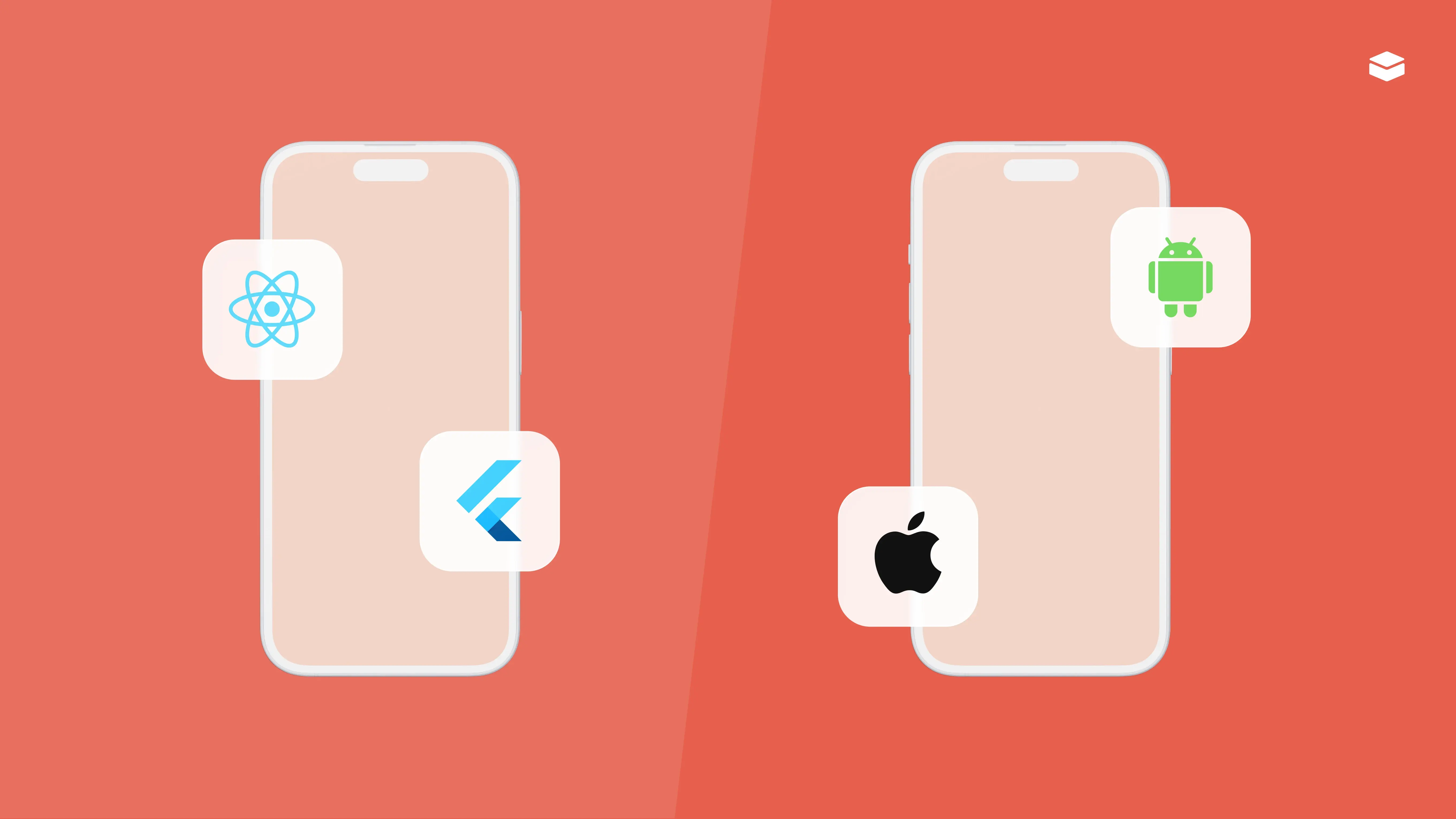
Both are cross-platform with one codebase. React Native has tight ties to the web stack and fits when an existing React/web team will own the app. Flutter draws its own UI, giving pixel-exact control and strong performance — in our experience Flutter usually gives a better result for new builds when you want cross-platform. And when hardware and platform feel are central, we recommend native. We make the call with you; Native vs. cross-platform walks through the reasoning.
Yes, extensive experience. We've built and maintained React Native apps for years, and several of our developers have deep React Native backgrounds. The technology sits close to our web and frontend competence, so the same team can move between app and web without friction.
Yes. Intunio is based on Korsgatan 24 in central Gothenburg. We also work with clients across Sweden, Europe, and North America, where we run development from our Gothenburg office.
Intunio Göteborg
Intunio is a design and development studio based in Gothenburg. We help companies create digital products, apps, and systems that are easy to use and built to last.

































Curious what we could do for you?
Get in touch with us at Intunio, and we'll take it from there.