Pre-study for digital products — from idea to MVP
Intunio runs pre-studies that take you from idea to first buildable version. Design, technology, and scope land together as the first step in actual delivery.
Intunio is a design and development studio in Gothenburg, helping teams move from a rough idea to a first buildable version. A pre-study provides direction, prioritisation, and a technical foundation. It is also the first step in actual delivery, not a separate analysis exercise.
A pre-study includes workshops, design sketches for key views, technical architecture and platform decisions, MVP scoping, and realistic effort estimates. The result is concrete material to build on.
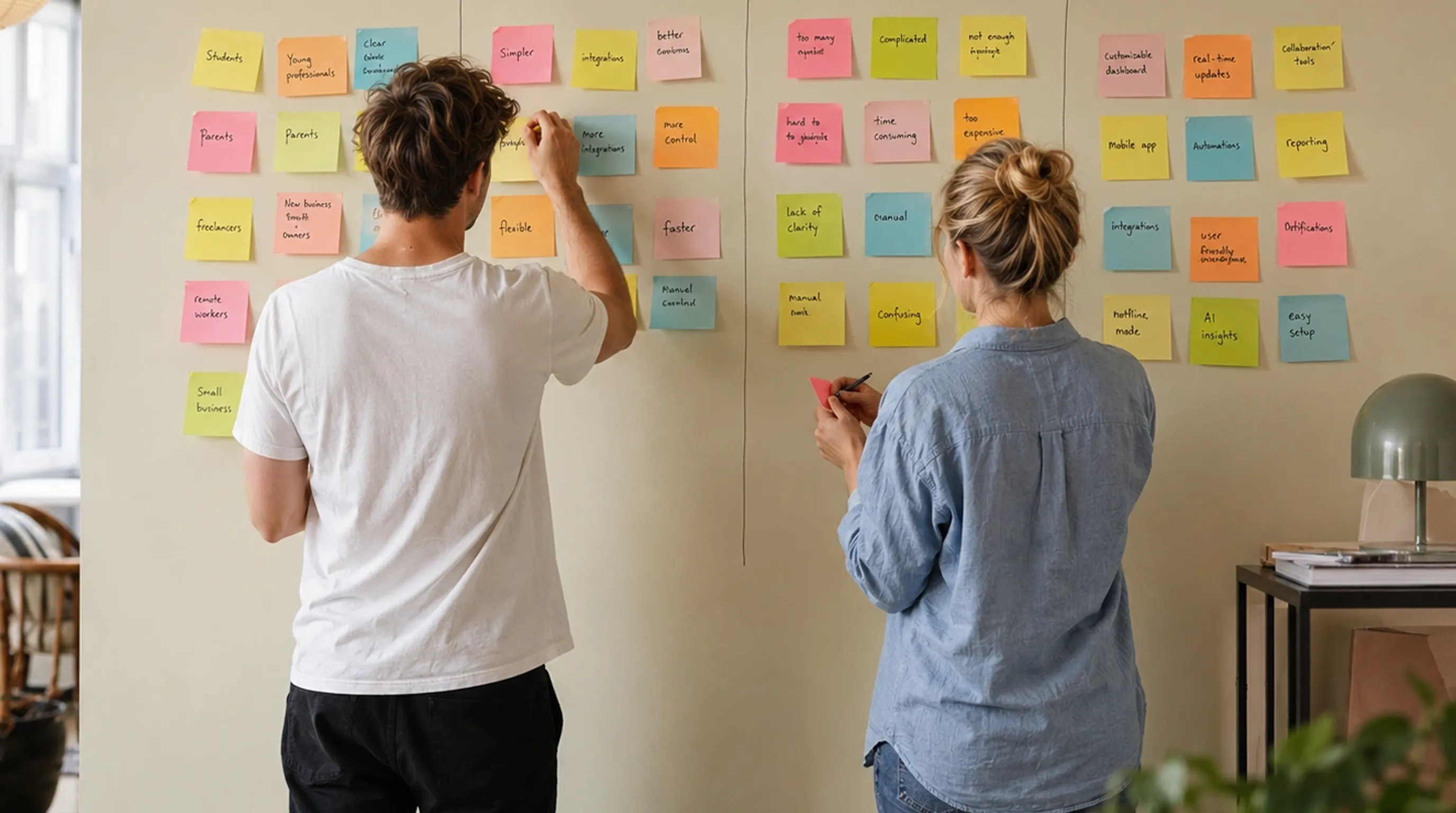
What's included in a pre-study
Workshops: we bring design, technology, and business stakeholders together around problems, goals, and scope. Early on it becomes clear what's well-founded and what rests on assumptions.
Design sketches for key views: concrete visualisations of main views or central flows. Not finished design, but material you can discuss and build on.
Technical architecture and platform choices: web vs native, integrations, backend, risks, and dependencies. Long-term feasibility, not just a quick start.
MVP scope and prioritisation: the right functions in the right order, on a technical foundation that holds for continued development. What actually goes into a first version, what can wait.
Realistic effort estimates: estimates and plans for continued development, grounded in the concrete material produced in the pre-study.
Design system foundation where relevant: when the product is part of a broader family or platform.
The industries we most often run pre-studies for are industrial, medtech, SaaS, and e-commerce. Conditions vary, but the structure stays the same.
The pre-study is the start of delivery
At Intunio, the pre-study is the first step in actual delivery work. Design and engineering are present from the first workshop, and design sketches are developed in parallel with technical reasoning about architecture, integrations, and platform.
It's concrete work from the start. The design sketches go into development as direction for actual screens. The technical architecture becomes the foundation for the platform decisions that get made. The effort estimates are grounded in the technical choices already taken, so the estimates hold up when development begins.
That's how we make the next step predictable: fewer surprises, a faster transition from pre-study to build, and a basis you can actually make decisions on.
How we work in a pre-study
A typical pre-study follows four steps, each building on the previous and keeping design work and technical decisions together.
Start
We bring design, technology, and business together around the same picture of what you're trying to achieve. Workshops where different perspectives meet and get sorted. The result is a shared problem definition, identified risks, and a first rough scope.
Exploration
As direction becomes clearer, the work moves into concrete exploration. Design sketches for main views or central parts, alongside technical reasoning about architecture, integrations, and platform. The sketches aren't finished design, they're discussion material that makes trade-offs tangible.
Scoping
Exploration leads to an MVP scope. What actually goes into a first version, what can wait. An MVP isn't the smallest possible function, but the right functions in the right order on a technical foundation that holds.
Result
When the pre-study ends, you have concrete material: a defined MVP scope, design sketches for central parts, technical recommendations, and realistic effort estimates. In some cases this leads directly into development. In others, to a deliberate decision to adjust direction or wait for the right moment. Both outcomes are valuable.
What we offer
Pre-studies vary in scope depending on product size and how much uncertainty exists around scope and technology. Three common engagements:
Mini pre-study (40–80 hours, approx. 40,000–80,000 SEK, delivered in 1–2 weeks): focused scoping for a concrete feature addition or a smaller product. Workshop, a few design sketches, brief technical assessment, prioritised action list. Suitable when the main direction is clear but details need concretising.
Standard pre-study (120–160 hours, approx. 120,000–160,000 SEK, delivered in 3–4 weeks): full pre-study for a new digital product or larger redesign. Workshop series, design sketches for key views, technical architecture, MVP scope, effort estimates. The most common engagement. Can be complemented with 2–3 user interviews for deeper validation of target group and needs.
Extended pre-study for complex systems (200–320 hours, approx. 200,000–320,000 SEK, delivered in 4–6 weeks): when the product is part of a broader platform, has complex integrations, or industrial requirements. Includes deeper research with user interviews, more design sketches, architecture validation, and possibly a design system foundation.
The pre-study often leads directly into app development or web development. We build on the material produced, so nothing is discarded in the transition. If you already have a first built version of the product, product validation is the related service — it verifies technology and customer value once the MVP exists.
What does a pre-study cost?
A pre-study costs from approx. 40,000–80,000 SEK for a smaller scoping to approx. 200,000–320,000 SEK for complex systems — the most common engagement, the standard pre-study, lands at approx. 120,000–160,000 SEK. Everything is billed at 995 SEK/h (our best price, with Team retainer). Pre-studies have a clearly defined scope, so we also offer them at a fixed price.
AI in our work
AI tools are included in the rate. We use Claude, Cursor, and Codex to make all our work more efficient: in research, design work, and technical reasoning. It's our expertise working faster.
Common starting points
Three typical situations where a pre-study becomes relevant:
When the idea exists but scope is unclear
A vision for a new digital product, a missing feature, an unmet need, but no clear picture of what to actually build, how, or in what order. A pre-study creates that picture.
When an existing system needs to be replaced or rebuilt
The old solution no longer meets the operational requirements, but a fresh start requires design, technology, and priorities to land at the same time. The pre-study makes it possible to decide before you commit to a new platform.
When the budget requires well-grounded decisions before development
Larger digital investments don't tolerate guesses about time and technology. A pre-study makes estimates realistic and provides material that holds up to scrutiny from leadership, finance, or the board.
In all three situations the starting point is the same: the pre-study reduces uncertainty before you commit to development, and gives you something concrete to build on.
Related content
Projects
Services
Insights
Frequently asked questions
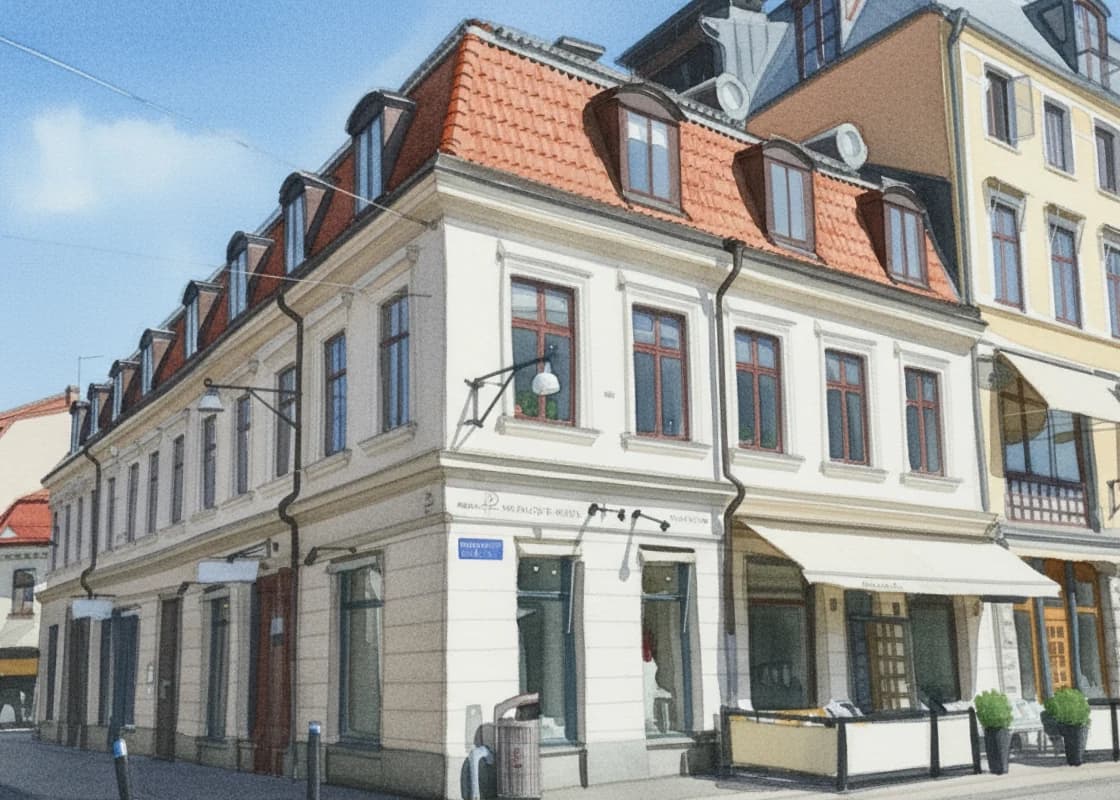
Intunio is based in Gothenburg, on Korsgatan 24 in the city centre. For clients in Gothenburg and Western Sweden, proximity is an important part of the collaboration, especially during pre-studies where workshops are central. We can be physically present at the most important moments, which gives a kind of continuity that's hard to achieve with fully remote teams. It also matches our model: we become an extension of your team over time, not an external supplier.
Yes. Intunio has had continuous engagements with clients in Sweden, Europe, and North America throughout our history. We have particular experience with clients in the US and Canada, so working across time zones is part of our normal rhythm. Workshops happen both over video and on-site, depending on what fits. For teams outside Sweden, we run pre-studies from our Gothenburg office, often with one or two on-site visits at critical moments.
A smaller pre-study takes 1–2 weeks (40–80 hours). A standard pre-study takes 3–4 weeks (120–160 hours). An extended pre-study for complex systems takes 4–6 weeks (200–320 hours). Estimates depend on product size, how much uncertainty there is around scope and technology, and how many stakeholders need to be involved.
A design sprint is typically an intense week focused on a specific design question or hypothesis. A pre-study is broader — it covers design, technology, and scope, and leads to material that can actually be built on. The design sprint can be part of a pre-study but rarely replaces it.
A defined MVP scope, design sketches for central views or flows, technical recommendations and architecture decisions, and realistic effort estimates for continued development. Plus a shared understanding of the problem and prioritisation, which is at least as valuable as the written material.
When conditions are already well-known — you know what to build, how to build it, and what dependencies exist — you can go directly into development. When uncertainty is high, the pre-study is often a cheap way to avoid expensive mistakes. If you're unsure which situation you're in: we run an initial assessment without commitment.
A mini pre-study at 40–80 hours costs approx. 40,000–80,000 SEK, a standard pre-study at 120–160 hours approx. 120,000–160,000 SEK, and an extended pre-study at 200–320 hours approx. 200,000–320,000 SEK. Everything is calculated on the hourly rate of 995 SEK/h — our best price, with Team retainer. We provide an exact quote once scope is confirmed.
We use Claude, Cursor, and Codex where they make the work better: in research, design synthesis, technical reasoning, and prototyping. That means you get faster iteration and more material in the same time, without compromising the quality of the analysis. It's expertise working faster, not AI replacing the expertise.
Intunio Gothenburg
Intunio is a design and development studio based in Gothenburg. We help companies create digital products, apps, and systems that are easy to use and built to last.
In pre-studies, we take you from a fuzzy idea to the first buildable version, always focused on a realistic MVP scope and technical choices you can stand behind.

































Need to get from idea to MVP?
Tell us where you are today, and we'll propose a setup for the pre-study and the next step.