Product validation — technical review and user validation
Intunio runs product validations with technical review and user validation, separately or in the same engagement. For MVPs that need quality assurance before launch or scaling.
Intunio is a design and development studio in Gothenburg, helping teams verify digital products before they commit to launch, scaling, or major continued development. We run technical review and user validation — in parallel, or separately if only one part is relevant — consolidated into reports that hold up to prioritisation discussions with leadership, investors, or the board.
The service fits MVPs developed iteratively with AI tools such as Lovable, Cursor, or Replit particularly well. There's often a lot of value to build on, alongside technical and business risks that need to be mapped before the product scales.
When does product validation fit? Product validation is for teams that already have an MVP or first version. For teams that haven't yet built the product, pre-study is the related service.
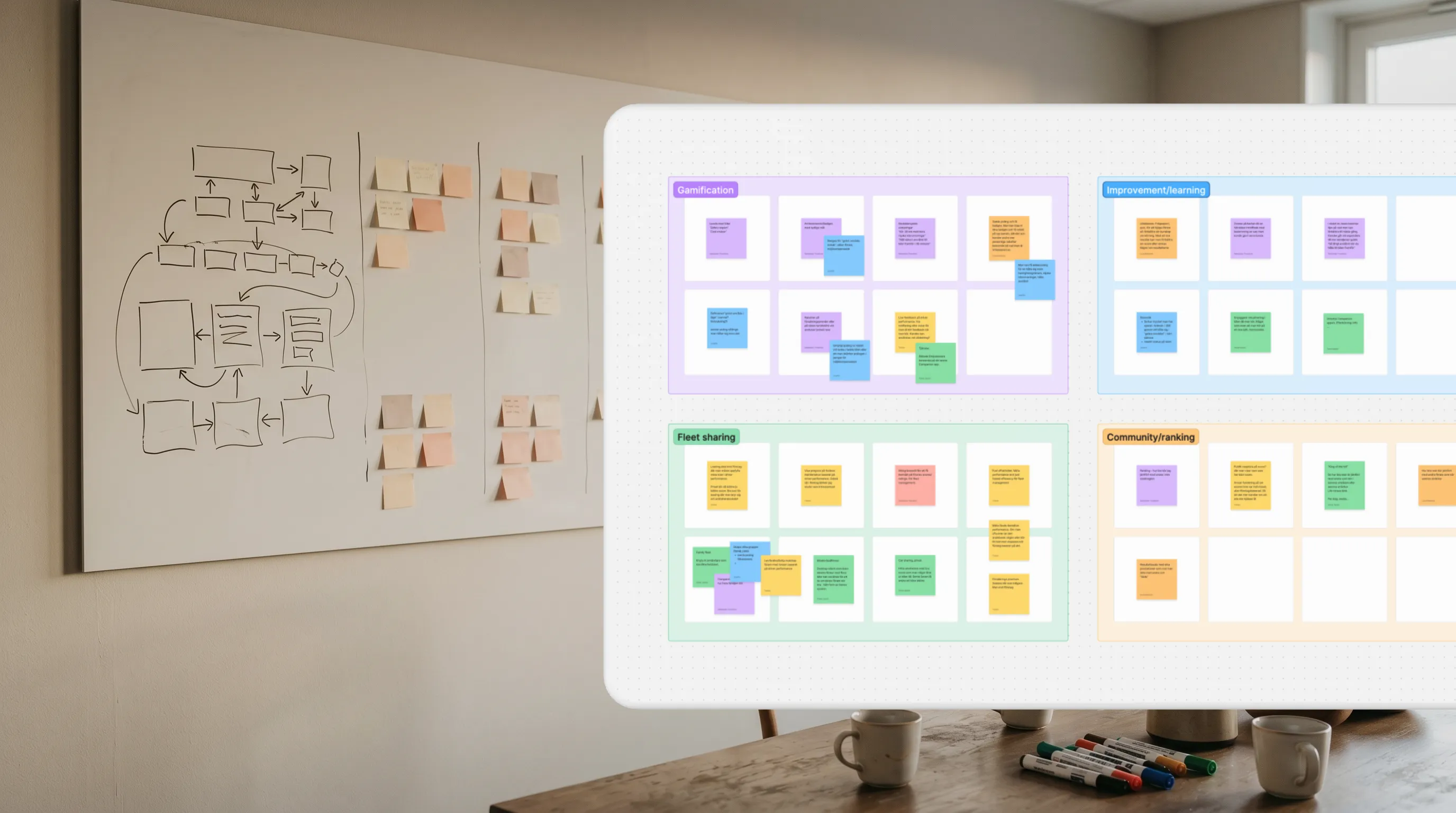
What's included in a product validation
Technical review: static code analysis, established tools, and manual review — complemented by AI-assisted analysis of security, data handling, AI flows, performance, and cost risks at scale
User validation: 3 in-depth interviews with the target group as standard, focused on product experience, value, and willingness to pay
Consolidated reporting: prioritised risk list (critical, high, medium, low), insights and quotes from interviews, recommended focus areas for continued development
Pragmatic method: a health check based on the product's phase, budget, and goals
Clear scope boundaries: we state what the review covers and what it does not, so you know what complementary work might be needed
The industries we most often run product validations for are SaaS, e-commerce, medtech, and industrial. Conditions vary, but the structure stays the same.
What it means at Intunio
At Intunio, we combine technical review with user validation in the same engagement. That means you get both technology and business perspectives, developed in parallel and brought together so they can be weighed against each other.
The review is a health check based on our experience in architecture, development, UX, and product development. We prioritise the questions that seem most important given the product's phase, budget, and goals, and provide recommendations that can be acted on directly once the report is delivered.
Technical review
The technical review is a health check of the codebase, architecture, and technical risks. The goal is to identify the most important risks and provide recommendations on what to focus on next.
We start with broad AI-assisted code analysis, complemented by established tools and manual technical assessment. Areas that can be included:
Authentication, authorisation, and access control
Data handling, data model, backend logic (e.g. Supabase, RLS)
API security, integrations, input validation
Handling of secrets, keys, and environment variables
Code quality, component structure, technical debt
AI flows, prompt-related risks, data leakage risks
Performance, load times, database queries
Cost risks at scale and possible savings (e.g. caching of AI responses, more cost-effective infrastructure)
We can also do lighter runtime observations in a test environment: walk through central flows, look at console logs and network errors, run lightweight tools like Lighthouse. These are complementary observations that broaden the picture, not full QA or performance testing.
User validation
User validation explores whether the target group understands, appreciates, and sees value worth paying for in the product. The setup is based on 60-minute video interviews, with 3 interviews as standard and the option for more if scope allows.
The interviews focus on four areas:
Product experience: how the participant experiences the flow, what feels valuable, what's unclear or missing
Value and willingness to pay: would the participant use the tool, what is it worth, what's required for them to pay
Positioning: how the product is perceived compared to alternatives (existing services, ChatGPT, consulting, internal workflow)
Current state and needs: how the participant solves the problem today, what works, and what doesn't
Interviews are recorded with consent so that analysis can be done carefully afterwards. You handle recruitment and booking of interview participants, as well as providing test accounts.
How we work in a product validation
Three phases:
Planning
Detailed work plan, booking of interviews, access to the codebase and test environment. Here we set exact scope and which areas to prioritise.
Execution
A focused period of intensive work, typically a few days. User interviews are conducted and the product is analysed in parallel, so technical and customer perspectives are produced during the same period.
Consolidation
The report is written and any complementary material gathered. The result is a consolidated assessment of the product's current state with clear conclusions and recommended focus areas, rather than a long list of unsorted observations.
What we offer
Two common engagements:
Standard product validation (around 40 hours, approx. 40,000 SEK, delivered in 1–2 weeks): 3 user interviews, technical review of codebase and AI flows, consolidated reports with prioritised risk lists and recommended focus areas. The most common engagement.
Extended product validation (around 80 hours, approx. 80,000 SEK, delivered in 2–3 weeks): 5+ user interviews, deep technical review, market positioning, and detailed reports. Suitable for larger systems or ahead of a funding round.
If we identify areas where specialist competence is needed (cybersecurity, legal GDPR assessment, formal certification), we recommend it.
What does a product validation cost?
A standard product validation costs approx. 40,000 SEK, an extended one approx. 80,000 SEK — see the packages above. Everything is billed at 995 SEK/h (our best price, with Team retainer).
AI in our work
AI tools are included in the rate. In code analysis we combine static analysis tools and security scanners with AI tools like Claude, Cursor, and Codex. In interview synthesis and report work we use AI for transcription and a first analysis pass. It's our expertise working faster, not AI replacing the review.
Common starting points
Three typical situations where a product validation becomes relevant:
Before launch or scaling of an MVP
The product is built iteratively, often with AI tools, and you want to know if it can handle wider distribution. A product validation maps technical, UX, and business risks before you commit to marketing or infrastructure.
Ahead of a funding round or major investment
Investors or the board ask for verification of technical foundation and customer value. The report provides a basis that holds up to scrutiny without being a formal audit.
Before further development of a product that didn't get the expected traction
You know something isn't working but don't know what. Product validation combines technical and customer perspectives to find where the problem sits.
In all three situations the result is the same: a consolidated picture of the product's current state and concrete recommendations for the next step.
Related content
Services
Insights

Frequently asked questions
Intunio is based in Gothenburg, on Korsgatan 24 in the city centre. For clients in Gothenburg and Western Sweden, proximity is an important part of the collaboration. Workshops, check-ins, and informal meetings often happen on-site at your place or ours, which gives a kind of continuity that's hard to achieve with fully remote teams. It also matches our model: we become an extension of your team over time, not an external supplier.
Yes. Intunio has had continuous engagements with clients in Sweden, Europe, and North America throughout our history. We have particular experience with clients in the US and Canada, so working across time zones is part of our normal rhythm. User interviews happen over video, technical review and report work are mainly done from Gothenburg. For clients outside Sweden the whole process works well without us being on-site.
A pre-study is done before development, to move from idea to a first buildable version. Product validation is done after a first built version, to verify that it holds up technically and commercially before you commit to the next phase. Both are pragmatic reviews with design and engineering perspectives, but they address different moments in the product's lifecycle.
A WCAG audit focuses on accessibility according to WCAG and the EAA directive. Product validation is broader: technical health check, user validation, and business perspective in the same engagement. If accessibility is the specific question, WCAG audit is the right tool. If you want a consolidated review of a product's current state, product validation is the right one.
3 in-depth interviews as standard, with the option to extend if scope allows. Three interviews are often enough to find the most important patterns without locking up too much of the budget. For an extended product validation we recommend 5–7 interviews for broader validation.
No. We run pragmatic reviews based on our experience, not formal audits or certifications. If you need penetration testing, formal GDPR assessment, or cybersecurity certification we recommend specialist providers for that. We can often point to which areas need deeper specialist review as part of the report.
A standard product validation at around 40 hours costs approx. 40,000 SEK, an extended one at around 80 hours approx. 80,000 SEK. Everything is calculated on the hourly rate of 995 SEK/h — our best price, with Team retainer. We provide an exact quote once scope is confirmed.
We use Claude, Cursor, and Codex in code analysis, interview synthesis, and report work. That means you get deeper review in the same time, since AI tools do a first pass of the codebase that we then quality-check and prioritise manually. It's expertise working faster.
Intunio Gothenburg
Intunio is a design and development studio based in Gothenburg. We help companies create digital products, apps, and systems that are easy to use and built to last.
In product validation, we go through the code, interface, and user flows in your digital product, always focused on what needs fixing before launch or scaling.














Need to quality-assure an MVP?
Tell us what the product is and where you are in the process, and we'll propose the right level of review.