Web development and frontend architecture — Next.js, headless CMS, and e-commerce
Intunio builds websites and web applications that convert — strategy, design, CMS, and development in a single coherent delivery.
Intunio is a design and development studio in Gothenburg, building websites and web applications built to grow. We set frontend architecture, headless CMS, design system integration, accessibility, and performance from the start, so the product holds up as the user base, team, and content grow.
Intunio helps companies build web products where user experience, technical quality, and long-term maintainability carry equal weight. Designers and engineers work in the same team throughout the project, so design and engineering land together rather than being handed over in stages.
We work both on bespoke websites and on complex web applications: customer portals, SaaS frontends, e-commerce, and data-heavy interfaces. The stack is typically React or Vue, Next.js for rendering and routing, headless CMS for content, and a design system for consistency.
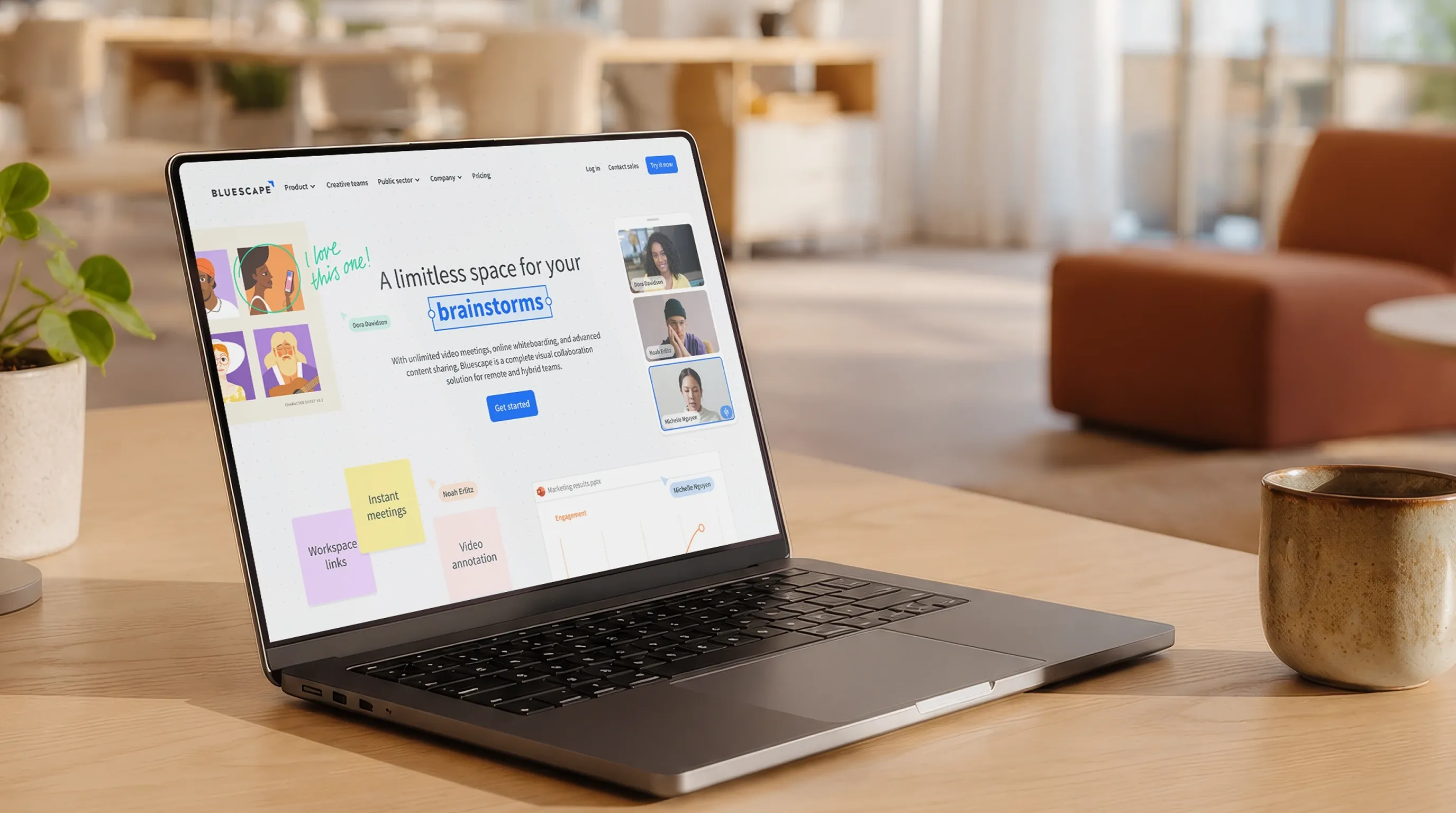
What we do
Frontend architecture for larger web apps: structure, routing, state management, performance, and maintainability for products meant to live for years and pass through multiple developers
Websites with headless CMS: marketing sites and B2B sites with Payload, Sanity, Strapi, or Contentful as the content layer, frontend in Next.js or Vue
E-commerce: bespoke customer experiences on Shopify, custom-built, or integrated with existing platforms
Design system integration on web: tokens, components, and documentation living in the code, so multiple products and teams can share a foundation
Accessibility as default: correct contrast, focus handling, and component patterns built in from the start, so EAA and WCAG requirements are met without a separate remediation project
Performance and Core Web Vitals: load times, image optimisation, server-side rendering, and caching that hold up over time
SEO in the implementation: semantic structure, meta data, structured data, internal linking built into code and CMS
The industries we most often build web for are industrial, SaaS, e-commerce, and medtech.
Frontend architecture — when the web app needs to live for years
It's quick to start a web project and get something into production. It's harder to build something that holds as it grows: more developers, more features, more integrations, a redesign two years in without tearing it down and starting over. That's where frontend architecture becomes decisive.
At Intunio we set architecture early and concretely. We take a position on routing, state management, data layer, component structure, and how the design system plugs into the code. We choose the framework based on what the product needs — Next.js for content-heavy sites and hybrid rendering, plain React for pure SPAs, Vue where teams already have Vue experience, a server-driven approach where it fits.
Frontend architecture is also where design and engineering have to meet. A component structure that looks fine in Figma but doesn't map to the code's components creates friction in every feature. We design and build in the same team, against the same structure, from the first view.
What a well-built web project delivers
For teams that haven't worked with modern web development before, the impact of good architecture isn't always obvious. At Intunio we see four areas where it shows:
Fast delivery without compromising the architecture
A structured architecture means the first version ships fast, and so do the second, third, and fourth. Shortcuts that ship quickly but lock the architecture are worse than a slower start.
Content your team can manage
With headless CMS at the core, the marketing team can update content without developers. A structured content model means the same content can be reused across surfaces, translated, versioned.
Accessibility and performance as default
Correct focus handling, contrast, and component patterns that follow WCAG, server-side rendering, image optimisation, and caching. These are expensive to add later but cheap to build in from the start.
SEO in the implementation, not as afterthought
Semantic structure, correct meta data, structured data, and performance are what search engines actually reward. They're built in when we set the architecture.
Is this the right service for us?
This service is built for editor-driven publishing, heavy content volumes, headless CMS flows (Payload, Sanity, Strapi, Contentful), and complex web applications where state management and integrations dominate. It delivers a mature platform where the marketing team works in a CMS UI and engineers in a separate codebase.
For startups, platform companies, and teams where agents (Claude Code, Cursor) need to read and update content directly, our AI-ready website service is often a better first step. It delivers a static site with design tokens, shadcn-based components, and content as Markdown in Git — client-owned and AI-readable from the first commit. The background is in our article on the md format.
The two services are not mutually exclusive. Many clients start AI-ready in a startup phase and add headless CMS as editorial needs grow.
How we work in a web project
A typical web project moves through four phases. The phases overlap, and in some engagements we come in mid-flow rather than at the start.
Pre-study
We produce scope, design sketches for key views, technical architecture, and realistic effort estimates. It's the first step in actual delivery, not a separate analysis. See the pre-study service for more.
Design and technical foundation
A first level of the design system and tokens is set, the repo is configured, CI/CD and deploy pipeline are in place, the headless CMS model is built. Designers and engineers begin producing in parallel.
Sprint-based development
Two-week sprints are most common. Design details are produced just before the engineer needs them. We quality-check continuously, on both design and code, including accessibility and performance.
Release and maintenance
Launch, first analytics setup, post-launch follow-up. For clients with a long-term product, we often transition into a rolling monthly engagement.
For clients who already have a web product, we typically enter at phase 2 or 3, often after a product validation that maps the current state before we start rebuilding or extending.
What we offer
Web varies more in scope than most other services: the gap between a marketing site and a complex SaaS frontend is enormous. Four common engagements:
Website audit or strategy (40–80 hours, approx. 40,000–80,000 SEK, delivered in 1–2 weeks): snapshot of an existing site or web app. Gap analysis, performance review, accessibility screening, prioritised actions. Suitable as a starting point when the current state needs to be mapped quickly.
Website with headless CMS (from 160 hours, from approx. 160,000 SEK, delivered in 4–8 weeks): marketing site, B2B site, or smaller e-commerce with headless CMS, design system foundation, accessibility, performance, and deploy pipeline. Suitable for a first version or a redesign of a smaller site.
Advanced web application or frontend architecture (from 480 hours, from approx. 480,000 SEK, with a typical advanced build landing at 1000–1200 hours, approx. 1,000,000–1,200,000 SEK; delivered in 8–14 weeks, often longer): SaaS frontend, industry platform, e-commerce with a complex catalogue, data-heavy interfaces. Frontend architecture, state management, integrations, accessibility, and performance from the start.
Long-term product team (rolling monthly, from 80 hours/month, approx. 80,000 SEK/month): a dedicated small team that follows your web product over time. New features, refactoring, performance work, content model development, support. The most common engagement for clients we work with across multiple years.
A design system is often part of the web engagement, built into the foundation. When it needs to scale across multiple products, we have a separate design system service. For clients who want both a mobile app and a web product with the same foundation, we combine app development and web in the same engagement.
What does a website cost?
A website costs from approx. 160,000 SEK for a marketing site with a headless CMS to over 1,000,000 SEK for an advanced web application (typically 1,000,000–1,200,000 SEK); a website audit costs approx. 40,000–80,000 SEK and a long-term product team from approx. 80,000 SEK/month. Everything is billed at 995 SEK/h (our best price, with Team retainer) — the packages above show hours and price.
AI in our work
AI tools are included in the rate. We use Claude, Cursor, and Codex to make all our work more efficient: in code, design work, code review, and technical reasoning. It's our expertise working faster.
Common starting points
Three typical situations where a conversation with Intunio becomes relevant:
When a marketing site or B2B site needs to be built or rebuilt
You have a site that's no longer working for your needs, or you're starting a new one. We go from strategy to launch, with a headless CMS foundation that lets your marketing team work independently afterwards.
When a web application has outgrown its architecture
The product is in production but the code is starting to hurt: features take longer, regressions appear, performance degrades. We come in with a frontend architecture perspective and rebuild the structure without tearing the product down.
When a new web application needs to be built from the ground up
A SaaS product, customer portal, or complex frontend that needs to live for many years. We set the architecture, the design system, and the development flow from the start, so the product holds as the team and user base grow.
In all three cases the starting point is the same: web is a design discipline as much as an engineering one, and the best results come when both sides share the backlog from day one.
Related content
Projects
Services
Insights
Frequently asked questions
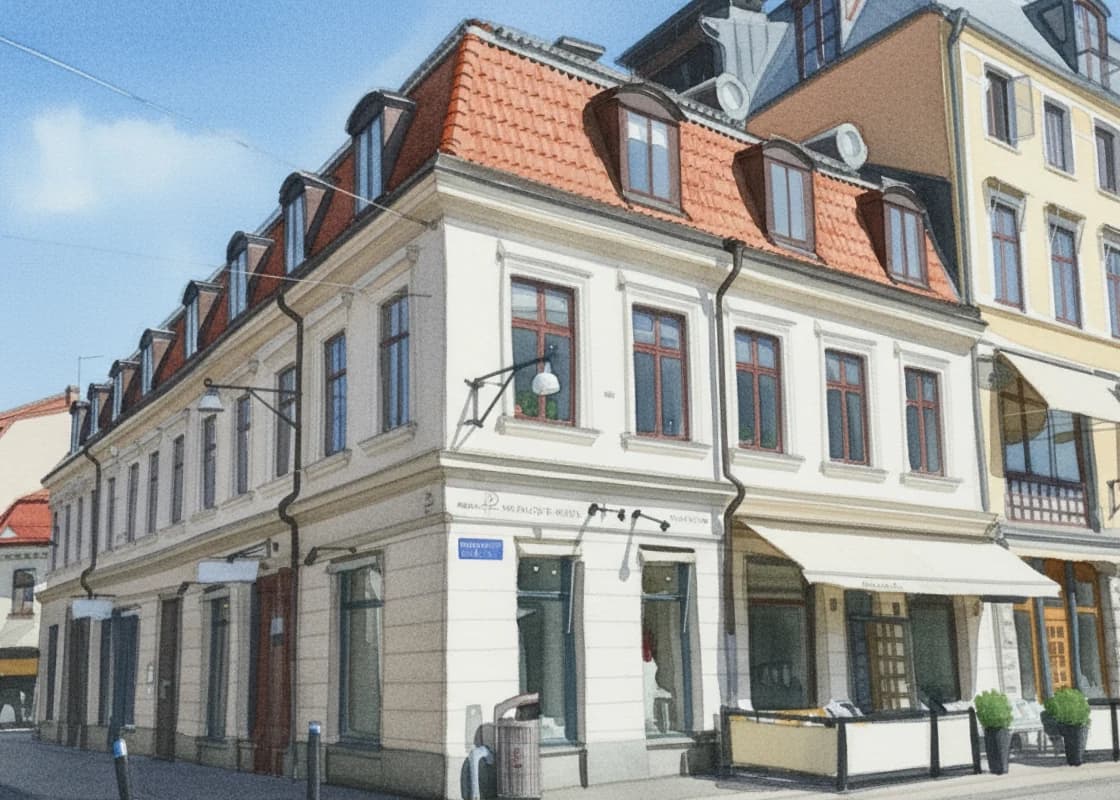
Intunio is based in Gothenburg, on Korsgatan 24 in the city centre. For clients in Gothenburg and Western Sweden, proximity is an important part of the collaboration, especially in longer web development engagements. Workshops, check-ins, and informal meetings often happen on-site at your place or ours, which gives a kind of continuity that's hard to achieve with fully remote teams. It also matches our model: we become an extension of your team over time, not an external supplier.
Yes. Intunio has had continuous engagements with clients in Sweden, Europe, and North America throughout our history. We have particular experience with clients in the US and Canada, so working across time zones is part of our normal rhythm. Design and development work mainly happens from our office in Gothenburg, complemented by workshops and check-ins on-site where it's valuable. For teams outside Sweden, we run the whole web development from our Gothenburg office.
For frontend we mostly use React and Next.js, but also Vue where teams already have Vue experience. We use TypeScript as default. For styling: Tailwind or CSS-in-JS depending on project size and team. For headless CMS: Payload, Sanity, Strapi, or Contentful depending on needs. For e-commerce: Shopify, custom, or integration. We're pragmatic about tool choices — what fits your product, your team, and your long-term maintenance carries the most weight.
A website is primarily content-driven: marketing sites, B2B sites, smaller e-commerce. Lots of content in the CMS, less complex frontend, focused on SEO and performance. A web application is function-driven: customer portal, SaaS product, data-heavy interfaces. Complex state management, more integrations, longer lifecycle. We do both, but the frontend architecture looks different. We make an initial assessment of which one you're in before giving an exact quote.
Headless CMS separates content from the presentation layer, making content reusable across surfaces (web, app, partner APIs) and the frontend free to evolve independently. Payload is mature and flexible, built in Node, and fits engineering-heavy teams. Sanity is fast and has a great editing experience, fits marketing teams. Strapi is open source and customisable. Contentful is enterprise-rich with many integrations. We make the choice together with you based on your team, your integrations, and your content structure.
We set performance from the start, not as afterthought. Server-side rendering or static generation where it fits, image optimisation with modern formats (AVIF, WebP), code splitting, prefetching critical resources, a caching strategy that matches the content's change rate. We measure against Core Web Vitals (LCP, INP, CLS) throughout development and have a performance budget as part of definition of done. It's expensive to fix performance late, cheap to build it in from the start.
Accessibility is built into the design system and component library from the start: correct contrast, semantic HTML, correct focus handling, ARIA where needed, keyboard navigation. We follow WCAG 2.2 AA as a baseline. For sites covered by EAA (the European Accessibility Act), we run a formal review as part of the delivery. See the accessibility service and WCAG audit for deeper work.
A marketing or B2B site with a headless CMS starts from 160 hours, from approx. 160,000 SEK, with a design system foundation, accessibility, and performance built in. All calculated on the hourly rate of 995 SEK/h.
From 480 hours, from approx. 480,000 SEK — a typical advanced build lands at 1000–1200 hours, approx. 1,000,000–1,200,000 SEK. We provide an exact quote once scope is confirmed.
A long-term product team starts from 80 hours/month, approx. 80,000 SEK/month. A website audit as a starting point costs approx. 40,000–80,000 SEK.
AI tools are included in the rate. We use Claude, Cursor, and Codex where they make the work better: in code, design work, code review, and technical reasoning. That means you get faster iteration and higher quality in the same time, since AI tools do a first pass that we then quality-check and tighten manually. It's expertise working faster, not AI replacing the expertise.
Intunio Gothenburg
Intunio is a design and development studio based in Gothenburg. We help companies create digital products, apps, and systems that are easy to use and built to last.
In web development, we work with frontend architecture, headless CMS, and design systems as the foundation, always focused on a product that holds up as your team and user base grow.































Need a web product built to grow?
Tell us about your project, your stack, and where you're heading, and we'll get back to you with a concrete picture of what's needed.