AI-ready website — Astro, design tokens, and Git-native content
Intunio builds Git-native websites with Astro and MDX — fast, AI-ready, and without a heavy CMS to maintain.
Intunio is a design and development studio in Gothenburg, building AI-ready websites: static, client-owned, with design tokens, shadcn-based components, and Markdown as content. A format that both your team and AI agents can read directly, without plugin or proprietary backend.
Our starting point is many years of experience with token-based design systems and web development, reframed for a world where the code is no longer necessarily written by a human and where content should be versioned, reviewed, and published in the same rhythm as code. Content, design, and code live in the same repository and belong together from the first commit.

When does your team need an AI-ready website?
For teams with an existing CMS-based site and no friction, keeping it alive is enough. Three situations where an AI-ready website becomes relevant:
When agents need to read and update the content
Claude Code, Cursor, and Codex can act directly on Markdown files in a repo in a way they can't against a proprietary CMS database. That opens up AI-driven content management, automatic translation, and content-by-prompt.
When you want to own the architecture without agency lock-in
Your existing site sits in a CMS or hosting stack where you depend on a specific vendor. Changing agency means tearing the product down. You want to own the code, change partners, and keep going.
When content needs to be versioned and reviewed like code
The marketing team wants preview, atomic releases (multiple changes published together), review flows, and history without learning a new CMS UI for every update. Content as Markdown in Git gives the same rhythm as your development process.
In all three cases the point is the same: when everything sits in Git in a readable format, control moves from the vendor back to you.
What we do
Design tokens as CSS custom properties: colour, typography, spacing, and motion expressed so that a future brand refresh changes in one place, not per component
Static site with a modern stack: Astro as default (zero JavaScript by default, islands for interactive parts), Next.js or Vue where it fits the product better
Shadcn-based components committed: buttons, form fields, cards, navigation — in your repo, with your tokens, no npm package dependency
Content blocks and page templates: a set of reusable blocks (hero, feature grid, quote, FAQ, etc.) that the marketing team combines without developer involvement
Markdown/MDX with front matter: content as files in Git, schema validation on front matter, schemas matching the page type
Editorial preview and atomic releases: changes in feature branches, preview deploys per branch, releases that ship when everything is ready together
Accessibility as default: WCAG 2.2 AA built in from the start, semantic structure, contrasts in the token system
Edge hosting: Cloudflare Pages, Vercel, or equivalent global CDN. No application server to maintain
Common audiences are startups, platform companies, B2B tech companies, and communication-heavy organisations that don't want to be locked into a CMS stack.
Not just a new stack — a different way of thinking about websites
At Intunio we see AI-ready websites as a natural extension of token work and Git-driven development we have done for years.
What really changes is where the source of truth lives. In a classic CMS stack, content sits in a proprietary database, the design system in a separate package, and hosting behind an agency portal. In an AI-ready website, everything sits in the same Git repo: design tokens, components, content, page templates, and deploy configuration. Whoever has repo access has the whole product — agent or human.
That's also why the client owns the code from the first commit. No proprietary dependencies, no specific agency that has to be involved for maintenance. When the agency is done, your team takes over, or moves to the next agency without tearing the product down.
Is this the right service for us?
This service fits when you want a website that is client-owned, AI-readable, and that your marketing team can manage via Git or a lightweight Git-based editor. It fits particularly well for platform companies, B2B tech, and startups that value control and speed over traditional CMS functionality.
For clients who need editor-driven publishing at scale, translation of heavy content volumes, or integration with existing enterprise stacks, our classic web development service with headless CMS (Payload, Sanity, Strapi, Contentful) is often better suited. CMS flows with roles, reviews, and translation features are still stronger in a traditional stack.
The two services are not mutually exclusive. Many clients start AI-ready in a first phase and add a heavier CMS as editorial needs grow. And the design system is the same in both, just packaged differently.
How we work in an AI-ready web project
Four phases:
Design system and tokens
We set design tokens (colour, typography, spacing, motion) as CSS custom properties and document them as part of the repo. Tokens are the source of truth for all visual consistency. The foundation set of shadcn-based components is also built here, customised to your tokens.
Content blocks and page templates
We design and build the set of content blocks the marketing team will use (hero, quote, feature grid, comparison, FAQ, etc.) and the page templates that combine them. The content model is defined through front matter schemas in MDX files.
Implementation and content flow
Components are built as Astro/Next components against the design system. Editorial preview, atomic releases, and template-driven navigation are set up. CI/CD and edge deploy are configured (client or us, by agreement).
Validation, accessibility, and launch
We run a WCAG 2.2 AA review, performance tests against Core Web Vitals, SEO redirects from the old structure. We do a handover where your team can publish without further help from us.
For clients who want to continue after launch, we move into a rolling monthly engagement for new components, content blocks, performance work, and support when the marketing team runs into new needs.
What we offer
AI-ready websites vary in scope depending on the number of page types, content blocks, and content model complexity. Four common engagements:
AI-ready website for a startup or smaller company (80–120 hours, approx. 80,000–120,000 SEK, delivered in 3–6 weeks): design tokens, 8–12 content blocks, 3–5 page templates, a foundation set of shadcn components, Markdown-based content, edge deploy. Suitable for a marketing site or product landing page.
AI-ready website for a platform company or product portfolio (from 320 hours, from approx. 320,000 SEK, with a typical platform build landing at 500–800 hours, approx. 500,000–800,000 SEK; delivered in 2–4 months): a larger design system, 15–25 content blocks, several page types (product, brand, company, news), editorial preview flows, editor support via Git-based editor. Suitable when the site needs to carry a brand and a product portfolio across several surfaces.
Conversion: CMS-based website → AI-ready (160–320 hours, approx. 160,000–320,000 SEK, delivered in 4–8 weeks): you have an existing site on Sanity, Contentful, WordPress, or similar. We migrate content to Markdown, establish design tokens, rebuild components as shadcn-based, and move hosting to the edge.
Long-term maintenance (rolling monthly, from 40 hours/month, approx. 40,000 SEK/month): new content blocks, page templates, design adjustments, performance work, and support for the marketing team. Lighter maintenance than traditional web projects because most content work happens in Git by the client themselves.
For clients who need a design system as the foundation for multiple products, we build it in parallel or link to our AI-ready design system service. The two ways of packaging design system and website follow the same principle: everything sits in Git, everything is agent-readable, everything is owned by the client.
What does an AI-ready website cost?
An AI-ready website costs approx. 80,000–120,000 SEK for a startup site and from approx. 320,000 SEK (typically 500,000–800,000 SEK) for a platform build; converting an existing CMS site approx. 160,000–320,000 SEK, maintenance from approx. 40,000 SEK/month. Everything is billed at 995 SEK/h (our best price, with Team retainer) — the packages above show hours and price.
AI in our work
AI tools are included in the rate. We use Claude, Cursor, and Codex to write component code, generate content block variants, set up page templates, and iterate on design tokens. The AI-ready architecture is also built so your own AI flow keeps working after launch — the agent has the same access to the repo as you do.
Common starting points
Three typical situations where a conversation with Intunio becomes relevant:
When a new brand identity needs to reach the web quickly
You've reworked the brand platform, visual identity, and tone of voice, and need a site that reflects it. We go from brand assets to live website via design tokens and content blocks, often in a few weeks.
When an existing site has outgrown its CMS stack
You notice that updates take too long, the agency dependency grows, and every feature requires a developer. The AI-ready architecture moves control back to you.
When you want to work AI-driven from the start
You already use Claude Code, Cursor, or similar for development work. A site in Git with Markdown content and shadcn components lets the agent work as freely on the website as on your code.
In all three cases the result is the same: a website your team owns, can evolve without tearing down, and which can be updated as easily by a human editor as by an AI agent.
Related content
Services
Insights
Frequently asked questions
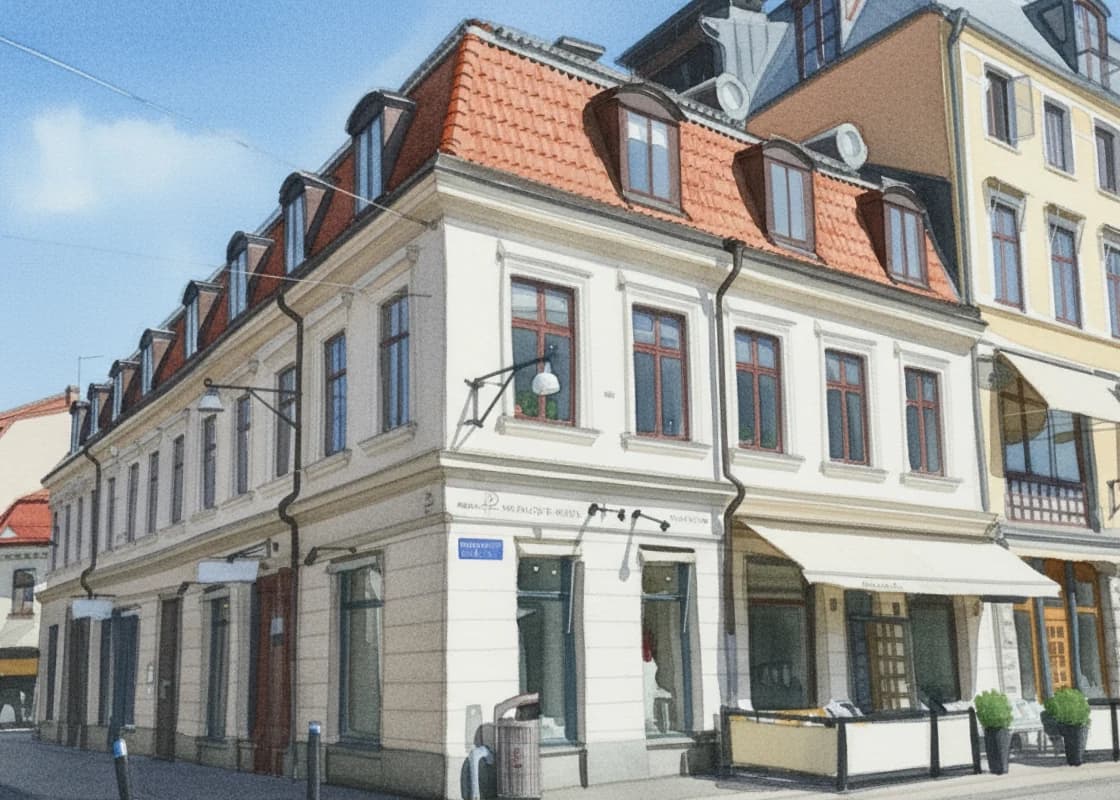
Intunio is based in Gothenburg, on Korsgatan 24 in the city centre. For clients in Gothenburg and Western Sweden, proximity is an important part of the collaboration. Workshops, check-ins, and informal meetings often happen on-site at your place or ours, which gives a kind of continuity that's hard to achieve with fully remote teams. It also matches our model: we become an extension of your team over time, not an external supplier.
Yes. Intunio has had continuous engagements with clients in Sweden, Europe, and North America throughout our history. We have particular experience with clients in the US and Canada, so working across time zones is part of our normal rhythm. For AI-ready websites our way of working fits particularly well, since the entire delivery is digital — we need access to your GitHub repo and brand assets. Workshops and check-ins happen over video, complemented by on-site visits where it's valuable.
Classic web development typically uses headless CMS (Payload, Sanity, Contentful) as the content layer and frontend in Next.js or Vue. An AI-ready website has content directly in Git as Markdown/MDX, components as source code committed in the repo (not as an npm package), and edge hosting without an application server. Both rest on the same fundamentals (design system, accessibility, performance), but the package format differs. We help you choose which fits based on your publishing needs, your technical team, and how freely you want agents to work against the content.
Default is Astro for rendering (zero JavaScript as baseline, islands for interactive parts), Tailwind CSS for styling, shadcn/ui as component foundation, and Markdown/MDX for content. For hosting we use Cloudflare Pages or an equivalent edge platform. Everything sits in a Git repo owned by the client. The stack can be adapted — Next.js where static generation isn't enough, Vue where the team already has Vue experience, other edge platforms where they fit.
The marketing team edits Markdown/MDX files directly in GitHub or through a lightweight Git-based editor (e.g. Decap CMS, TinaCMS, or similar) that provides an editor-friendly view over the same files. Creating a new page means copying a page template, filling in front matter and content. Navigation auto-populates from page metadata. For larger structural changes (new top-level sections, changed menu hierarchy), developer support is needed.
`design.md` is a machine-readable specification of the design system (tokens, component specifications, and rationale) that AI agents can read directly. For an AI-ready website, `design.md` (or equivalent) is the source of truth for the visual layer, and tokens are exported as CSS custom properties into the components. That means a brand update changes tokens in one place and updates the entire site. See our AI-ready design system service for more.
Accessibility is built into the design system from the start: correct contrasts in tokens, semantic HTML in components, correct focus handling, ARIA where needed, keyboard navigation. We follow WCAG 2.2 AA as a baseline. For sites covered by EAA (the European Accessibility Act), we run a formal review as part of the delivery. See the accessibility service for deeper work.
An AI-ready website for a startup (80–120 hours) costs approx. 80,000–120,000 SEK, a platform build from 320 hours from approx. 320,000 SEK (typically 500,000–800,000 SEK), and a CMS conversion (160–320 hours) approx. 160,000–320,000 SEK. Long-term maintenance from 40 hours/month costs approx. 40,000 SEK/month. Everything is calculated on the hourly rate of 995 SEK/h — our best price, with Team retainer. We provide an exact quote once scope is confirmed.
Both. We use Claude, Cursor, and Codex actively when we write component code, generate content block variants, iterate on design tokens, and build up page templates. That means our delivery is faster. And since the architecture is agent-readable from the start, your own AI flow works just as well after launch — the agent has the same access to the repo as you do.
Intunio Gothenburg
Intunio is a design and development studio based in Gothenburg. We help companies create digital products, apps, and systems that are easy to use and built to last.
For AI-ready websites, we work with Astro, design tokens, and Markdown as content, always focused on you owning the code and on a format that works for people and AI agents alike.






























Need an AI-ready website?
Tell us about your project and your marketing team, and we'll get back to you with a concrete proposal for scope and setup.