Industrial AI — process automation, data flows, and AI adoption
Intunio helps industrial companies use AI where it creates value — administration, production, and adoption among your users.
Intunio is a design and development studio in Gothenburg, helping industrial companies implement AI where it makes a difference. We automate manual processes, build AI assistants and integrations that actually get used, and support the organisation in adopting AI as part of daily work.
At Intunio, AI isn't a lab project running alongside operations. It's a practical tool meant to free up time from manual work, eliminate unnecessary administration, and help people make better decisions in their daily work. We start in reality: which processes cost the most time, which decisions are made on assumptions, which reports are compiled manually week after week. Then we build solutions that solve those specific problems.
We're not a specialised ML agency with a separate lab team. We're a design and development studio that has implemented AI in our own work and translates that experience into how industrial companies can do the same.
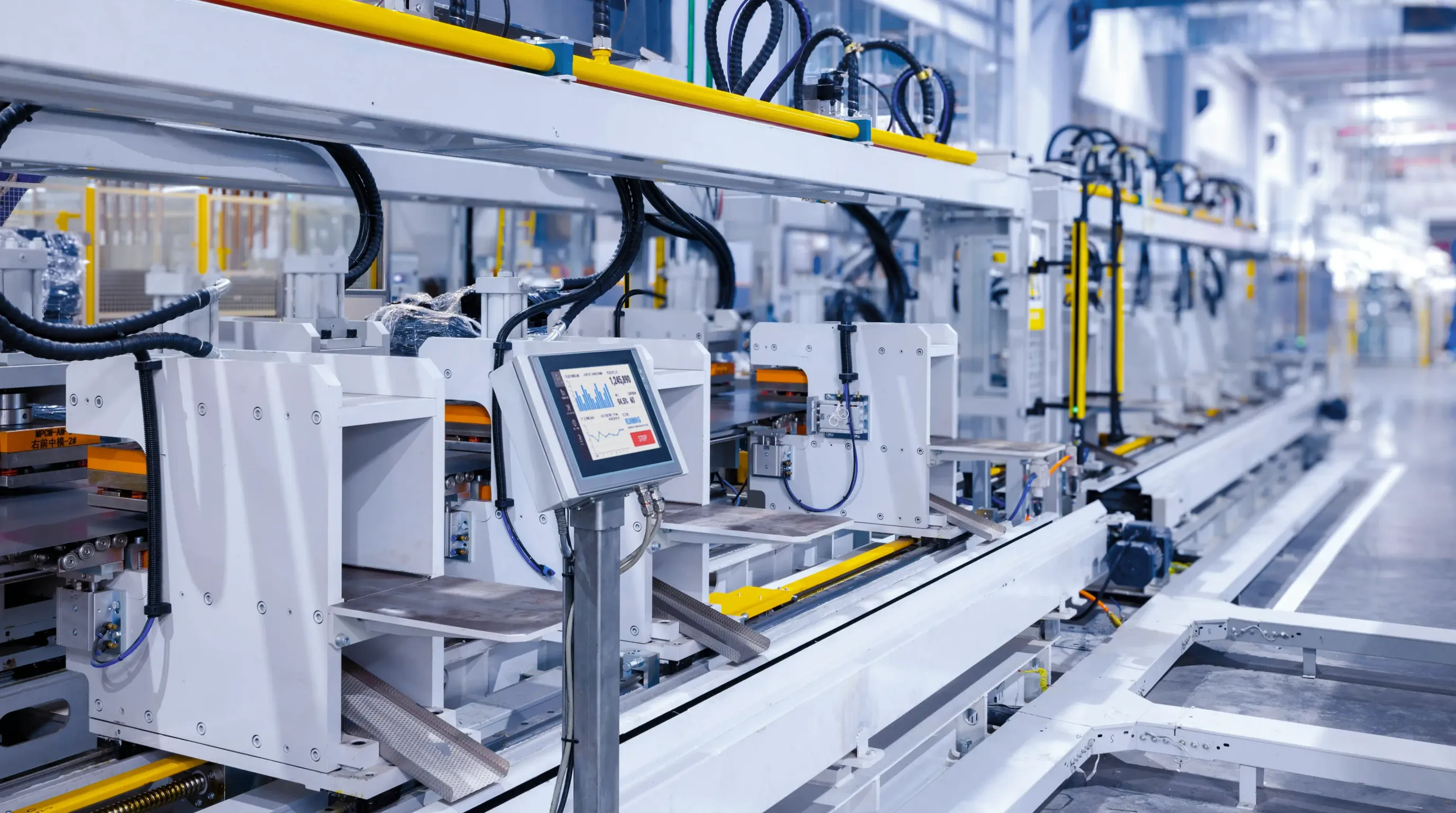
What we do
Automation of administrative processes: manual reports, Excel-based flows, documentation, internal compilations and communications that can be done by AI or workflow tools
AI assistants for internal teams: knowledge bases with RAG, instructed assistants for support, onboarding, and documentation search, integrated where people already work
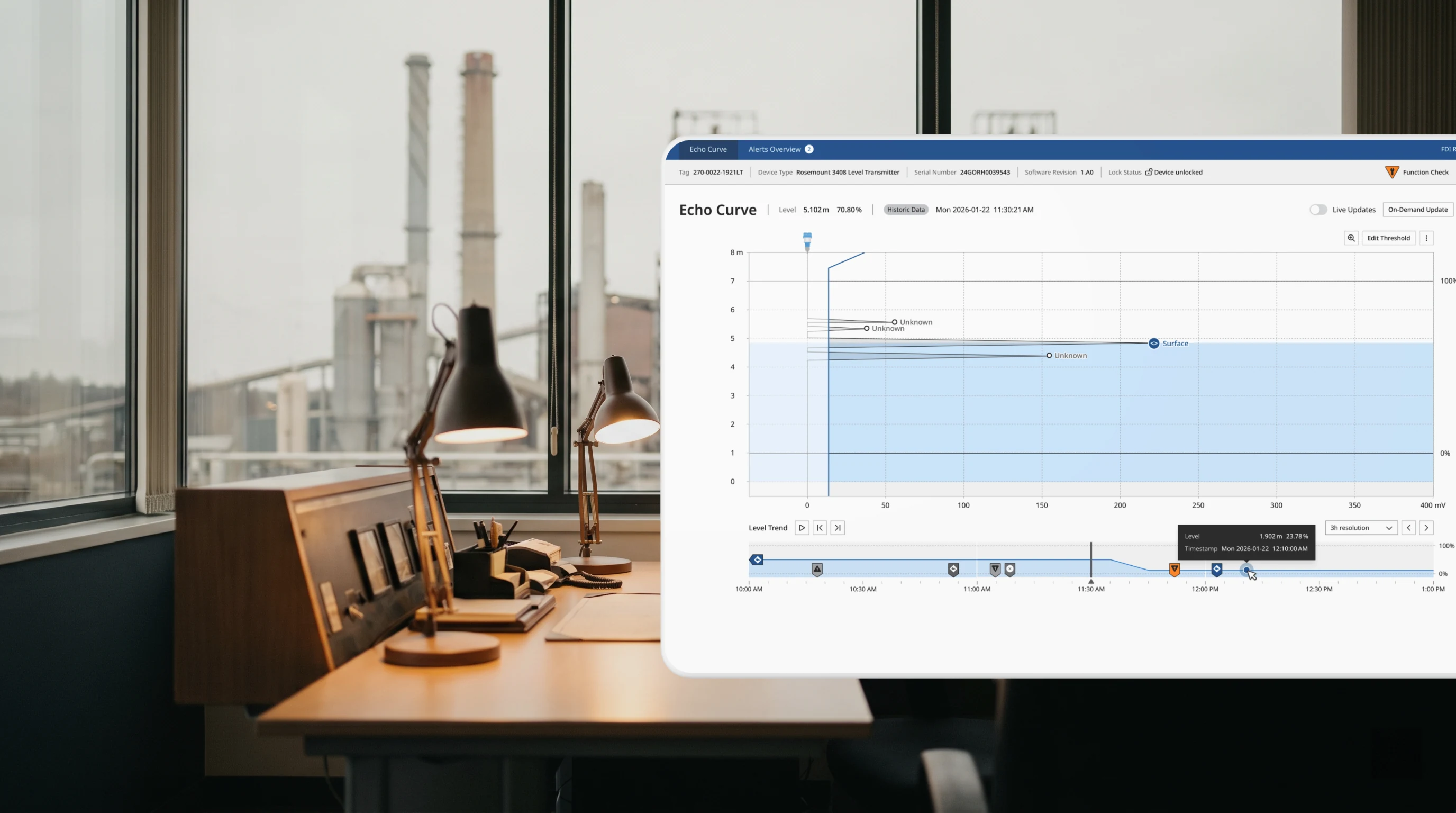
Data integration and dashboards: connection between production systems, MES, ERP, and data warehouses. Real-time monitoring, anomaly detection, and decision support built on your own data
AI-driven analysis in production: support for demand forecasting, predictive maintenance, and deviation analysis (we build the interfaces and integration; specialised modelling is done in partnership with your data scientists or external specialists where required)
Use case identification: workshop-based walkthrough of your processes to find the areas where AI actually delivers the most impact
Long-term adoption coaching: ongoing support to help the organisation move from first pilot to AI as a natural part of daily work
The industries we most often work with here are manufacturing, process industry, automotive, and industrial technology companies.
AI that actually gets used, not AI that gets demonstrated
At Intunio, we build AI for daily work, tools that need to be used every day by people with a full schedule. That puts different demands on the design than impressing in a meeting room: different priorities, different trade-offs, different measures of success.
An AI pilot that proves the technology works is not the same as an AI solution that actually gets used in operations. The difference rarely lies in the model — it lies in how the solution fits into the flow: integrated into the tools people already use, clear about when it's confident and when it isn't, and with as little friction as possible to provide value.
That's where our design and engineering background becomes decisive. We build AI solutions the organisation actually wants to use, not tools the organisation has to be forced to use.
Three areas where industrial AI makes a concrete difference
Administration automation
Manual reports that take hours every week. Excel flows where the same data gets copied between sheets. Compilations someone has to make to find out what's actually happening. AI and workflow automation can often eliminate 60–80% of this work in a few weeks, and the people freed up get time to work on what actually creates value.
Data and AI integration in production
Real-time monitoring of production data, anomaly detection that flags deviations before they become costly, demand forecasting for planning, predictive maintenance to reduce unplanned downtime. We handle the integration with your production systems, dashboards, and the interfaces where people act on the data. Specialised ML modelling is done in partnership with your data scientists or external specialists where required.
AI adoption in the organisation
Workshops, training, internal AI assistants, use case identification. We have ourselves moved from a team that sometimes uses AI to a team where AI is a natural part of every task. That journey is what we translate into how your organisation can do the same.
Is this the right service for us?
This service fits when you want to implement AI where it provides operational value, with a partner who understands both industrial context and how AI actually works. We build AI assistants, automate processes, integrate data, and help you adopt AI in daily work.
For specialised ML modelling (custom-trained deep learning models, computer vision for specific defect detection, optimisation at advanced mathematical levels), a pure ML agency or academic partner is often better suited. We collaborate with such partners when the engagement requires it.
For UX and interfaces in your industrial products (HMI, embedded UI, operator interfaces), our industrial UX service is the related service. One is about AI in operations, the other is about interfaces in the products. Many clients engage both in parallel.
How we work in an industrial AI engagement
Four phases:
Discovery and use case mapping
We start with workshops in your operations to map where time goes, where decisions are uncertain, which reports take the most manual work. We prioritise use cases by business value and feasibility. The result is a shortlist of concrete projects and a recommendation on where to start.
Pilot
We build a first, scoped solution for a concrete use case. The pilot build happens close to the people who will use it, with fast iterations based on real usage. The goal isn't a demo but something that actually gets used after the pilot period.
Implementation and adoption
Once the pilot has proven valuable, we build it out to production: integrations with your systems, security review, documentation, and training. We also follow up to make sure the solution is actually used as intended, not just available.
Maintenance and expansion
AI solutions aren't static. Models need updating, use cases evolve, and new areas emerge. We often move into a rolling monthly engagement where we maintain existing solutions, add new ones, and support the organisation continuously.
What we offer
Industrial AI work varies widely in scope. Four common engagements:
AI discovery and use case workshop (40–80 hours, approx. 40,000–80,000 SEK, delivered in 1–2 weeks): workshops, interviews with the organisation, mapping of processes and decision support, prioritised list of AI use cases with business value and implementation assessment. Suitable as a first step when you know AI is coming but not where.
AI pilot for a single area (160–320 hours, approx. 160,000–320,000 SEK, delivered in 6–10 weeks): a concrete pilot — process automation, an AI assistant for a team, a first data integration. Built to be used, not just demonstrated. Suitable for seeing what AI actually delivers in your context.
Larger AI implementation (from 480 hours, from approx. 480,000 SEK, typically 800–1500 hours, approx. 800,000–1,500,000 SEK; delivered in 3–6 months, often longer): multiple linked AI solutions, integration with existing systems, security review, adoption work. Suitable when you've moved past pilot and need to scale AI across the organisation.
Long-term AI team (rolling monthly, from 80 hours/month, approx. 80,000 SEK/month): a dedicated team following your AI journey over time. Maintains existing solutions, adds new use cases, supports adoption and trains the organisation. The most common engagement for clients we work with across multiple years.
For clients who need specialised ML modelling in parallel, we collaborate with external specialists or your own data scientists. We take responsibility for design, integration, and adoption; the modelling specialist takes responsibility for the algorithm.
What does industrial AI cost?
Industrial AI costs from approx. 40,000–80,000 SEK for a use case workshop to approx. 800,000–1,500,000 SEK for a larger implementation; an AI pilot lands at approx. 160,000–320,000 SEK and a long-term AI team from approx. 80,000 SEK/month. Everything is billed at 995 SEK/h (our best price, with Team retainer) — the packages above show hours and price.
AI in our work
AI tools are included in the rate. We use Claude, Cursor, Codex, and other AI tools in our own work. That means we build faster, and that we have first-hand experience of what it means to integrate AI in an operation — something we bring into every engagement.
Common starting points
Three typical situations where a conversation with Intunio becomes relevant:
When leadership wants to move into AI but no one knows where
There's a sense that AI should be implemented but no concrete projects have landed. A use case workshop produces a prioritised list and a recommendation on where to actually start.
When a first AI pilot works but doesn't spread
You have a solution that has shown value but isn't used more broadly. Often it isn't the technology that holds it back — it's adoption: interface, integration, training. We come in with focus on those parts.
When administration and manual processes eat too much time
The team reports manually, compiles data in Excel, makes internal summaries, and doesn't have time for what actually creates value. AI and workflow automation can often remove 60–80% of that work in a few weeks.
In all three cases the starting point is the same: AI that gets adopted daily is valuable. AI that only gets demonstrated isn't.
Related content
Projects

Services

Frequently asked questions
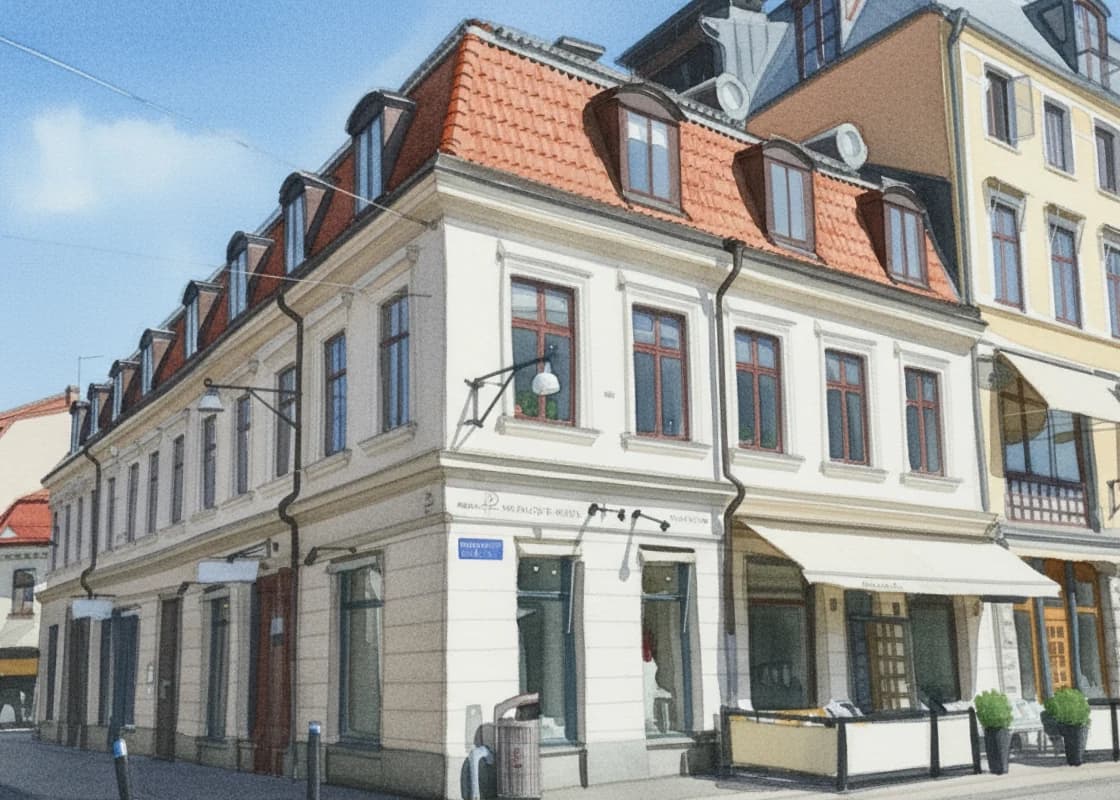
Intunio is based in Gothenburg, on Korsgatan 24 in the city centre. For industrial clients in Gothenburg and Western Sweden, proximity is an important part of the collaboration. AI engagements in an industrial context often require on-site work: workshops with the organisation, interviews with operators and technicians, and field observations to understand how processes actually unfold. We become an extension of your team over time, not an external supplier.
Yes. Intunio has had continuous engagements with clients in Sweden, Europe, and North America throughout our history. We have particular experience with clients in the US and Canada, so working across time zones is part of our normal rhythm. For industrial AI engagements on-site work is important in the discovery and adoption phases, but implementation can often be done from our office in Gothenburg.
No. Intunio is a design and development studio. We build AI solutions that get used in operations — assistants, automation, integrations, interfaces, and adoption. Specialised ML modelling (custom-trained deep learning models, computer vision for specific defect detection) is done in partnership with external specialists or your own data scientists. Our strength is in translating AI possibility into tools that actually get used.
Industrial UX is about the interface in your industrial products — HMI, embedded UI, operator interfaces, design systems for product families. Industrial AI is about AI in your operations — automation, AI assistants, data flows, and internal adoption. The two can be combined: AI can be part of an industrial product, and the product can support AI-driven operations. Many clients engage both services in parallel.
For any integration with production data or personal data, we have clear data handling from the start. We recommend EU-hosted infrastructure for sensitive data, RAG systems where data doesn't leave your environment, and security review as part of implementation. We recommend specialists for formal GDPR assessment or cybersecurity certification where required. We are not a formal DPO or cybersecurity auditor — we build solutions that follow good practice and point to areas that need deeper review.
Default: Python for data and AI work, Node/TypeScript for integrations and web-based interfaces. For LLM solutions we work with Claude, GPT, local models where appropriate, and RAG systems built on vector databases. For data integration: APIs, ETL flows, data warehouses (BigQuery, Snowflake, Postgres) depending on your stack. For workflow automation: n8n, Zapier, or bespoke solutions. We're pragmatic about tools — what fits your stack and your data security requirements carries the most weight.
An AI pilot for a scoped use case typically takes 6–10 weeks from start. The first 1–2 weeks go to discovery and use case prioritisation. The rest is design, build, and iteration with real users. For clients with a clear idea of what to build, the pilot can go live faster. For clients with complex integration with existing systems, it takes longer.
An AI pilot for a single area takes 160–320 hours and costs approx. 160,000–320,000 SEK. An AI discovery and use case workshop as a first step costs approx. 40,000–80,000 SEK. All calculated on the hourly rate of 995 SEK/h.
From 480 hours, from approx. 480,000 SEK — typically 800–1500 hours, approx. 800,000–1,500,000 SEK. A long-term AI team after that from 80 hours/month, approx. 80,000 SEK/month.
Yes. We've implemented AI as standard in our design and development process: Claude, Cursor, and Codex are used daily for code generation, design work, documentation, and synthesis. That has taught us what it takes for AI to actually get adopted (not just installed): clear integration with the tools people already use, fast iteration based on real usage, and continuous coaching rather than a one-off training session. We bring that experience into every industrial AI engagement.
Intunio Gothenburg
Intunio is a design and development studio based in Gothenburg. We help companies create digital products, apps, and systems that are easy to use and built to last.
In industrial AI, covering process automation, data flows, and AI adoption, we work with design and development that meets your specific needs, always focused on quality and long-term usability.
























Want to know more?
Tell us where you are today, and we'll get back to you with a proposal for the next step.