UX, design and software for industrial products
Intunio specialises in industrial UX. We design HMI, embedded UI, and design systems for industrial product families with long lifecycles.
Intunio is a design and development studio based in Gothenburg. We help industrial companies design and build digital products where safety and precision are critical, systems are complex, and every decision impacts operations, safety, and reliability in daily use. We work across embedded interfaces, configuration tools, web-based platforms, and shared design systems.
We make advanced technology clear, efficient, and reliable to use — in real industrial environments.
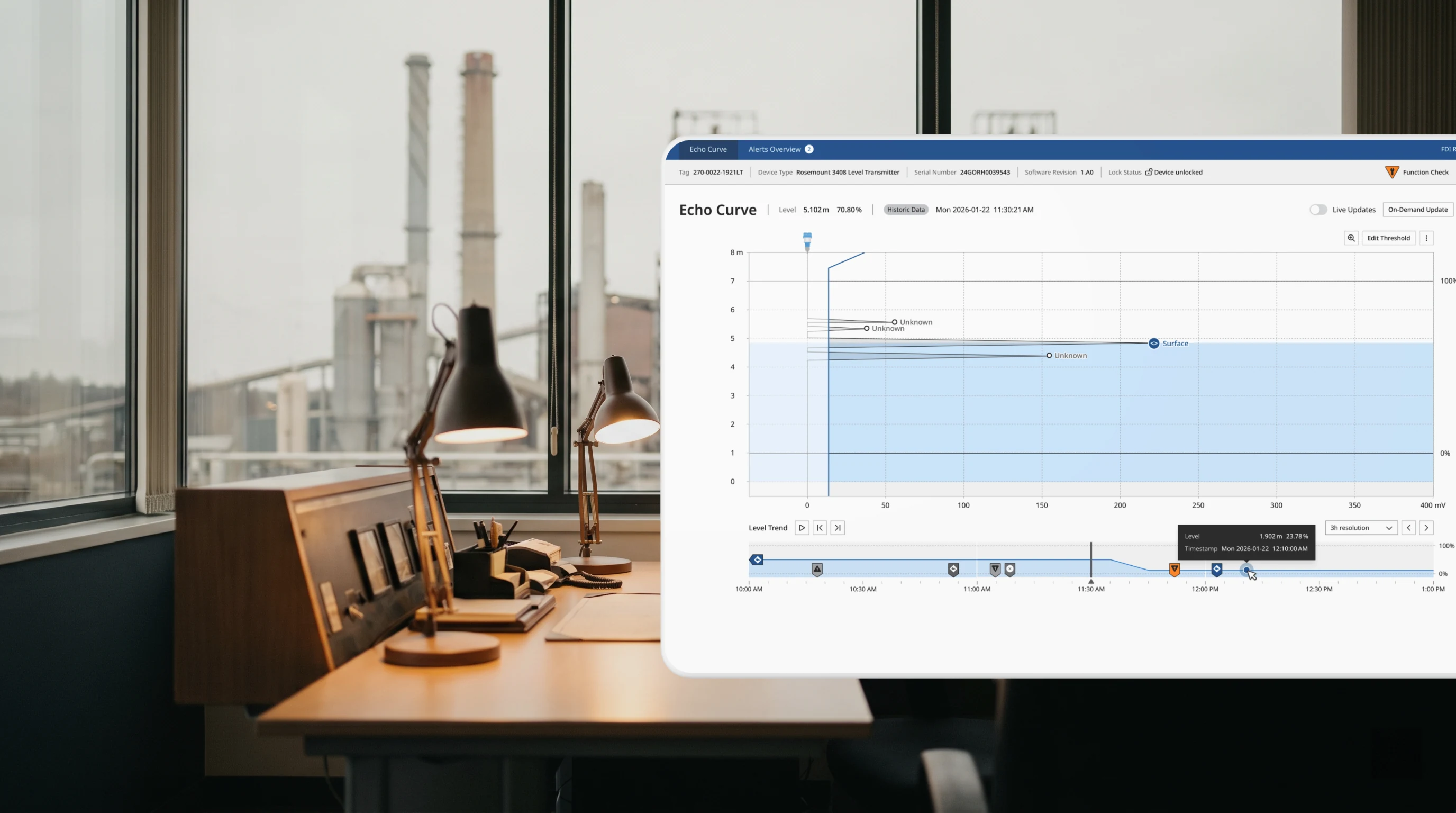
What we do
UX for complex industrial systems: HMI, operator interfaces, and decision support for safety-critical environments
Embedded UI and product-integrated interfaces: design for small displays, hybrid interactions (touch + buttons + status indicators), tightly integrated with hardware
SCADA interfaces and control systems: monitoring, status, diagnostics, alarm management
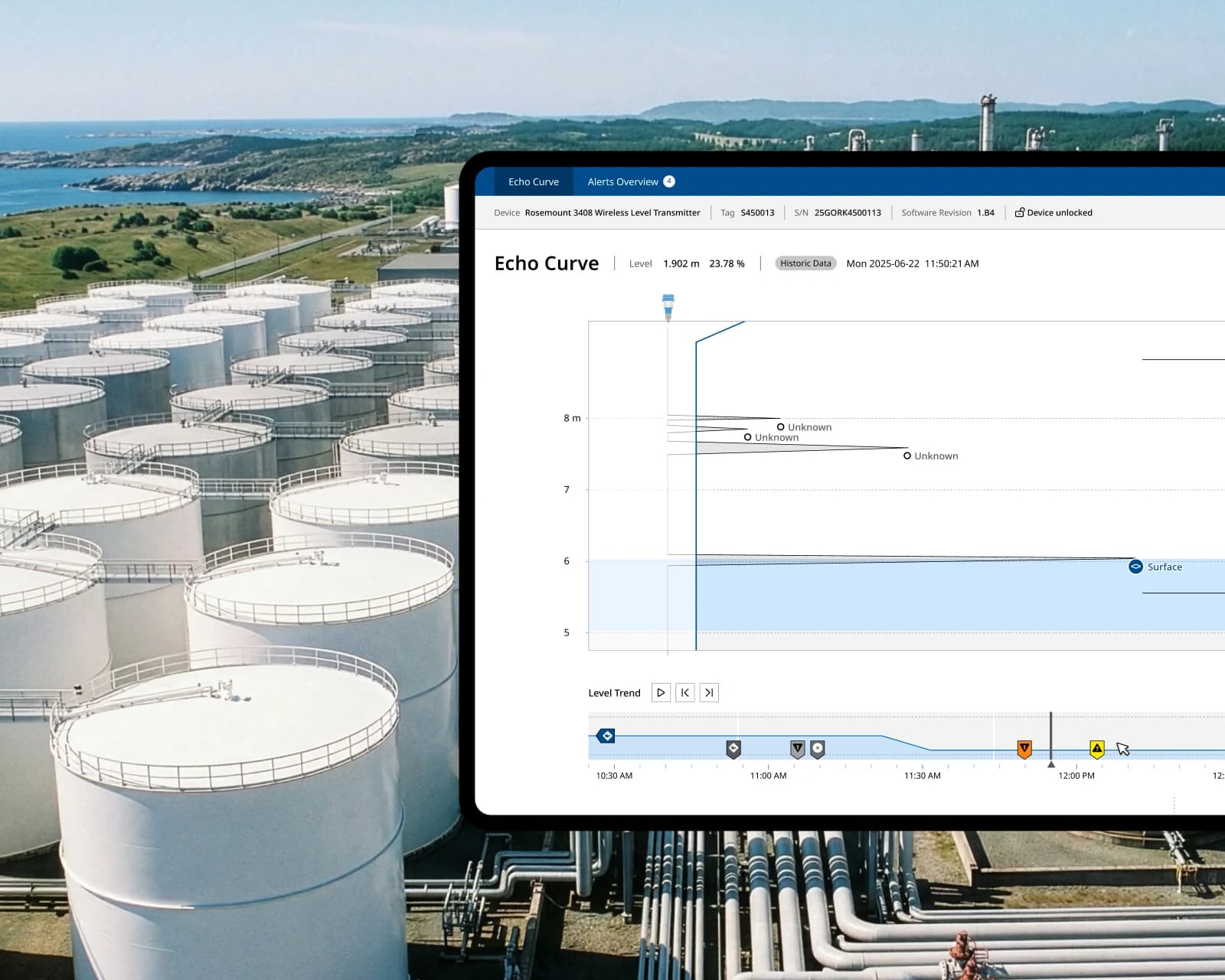
Web-based industrial applications: configuration, monitoring, analysis, working alongside product-integrated interfaces
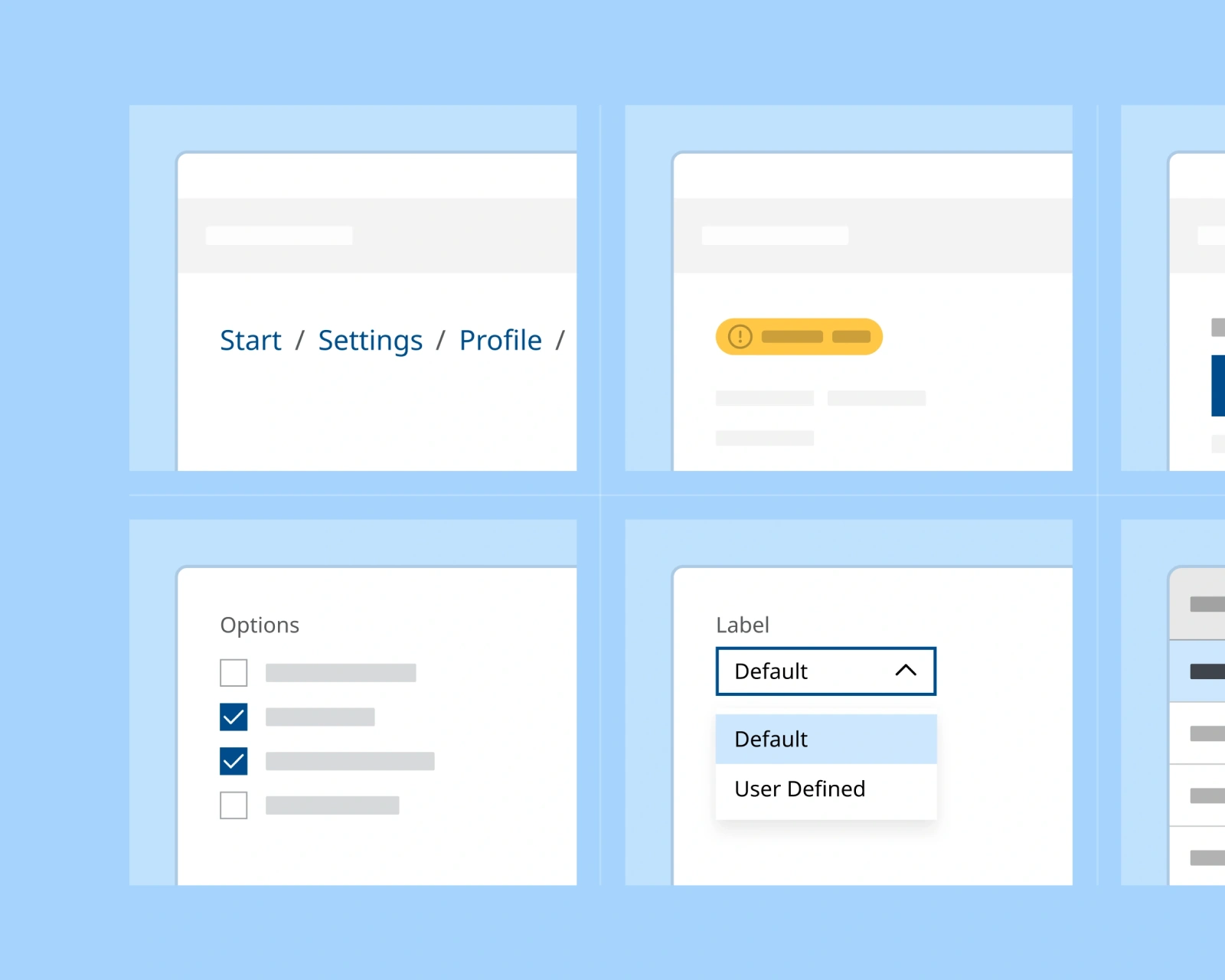
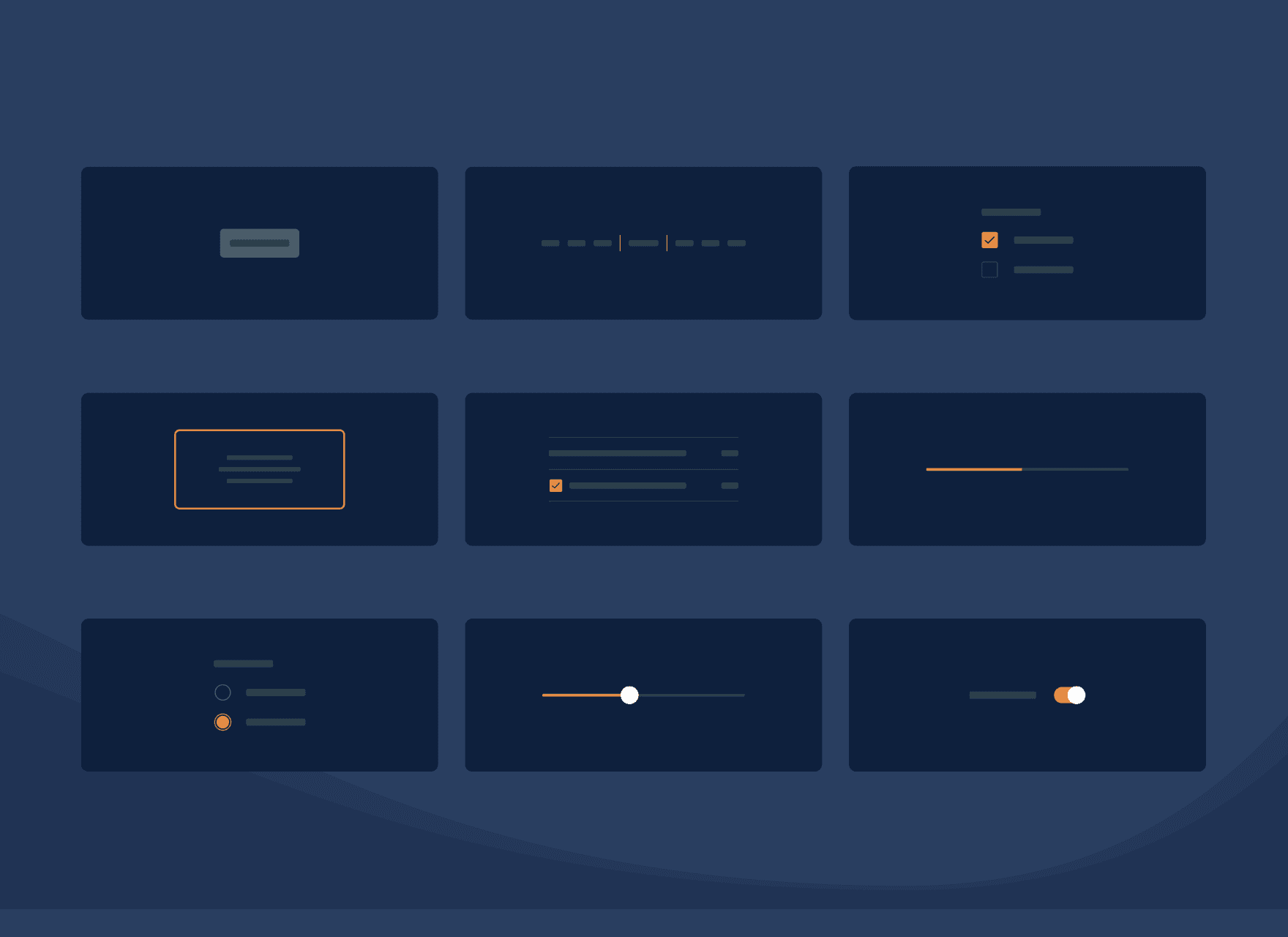
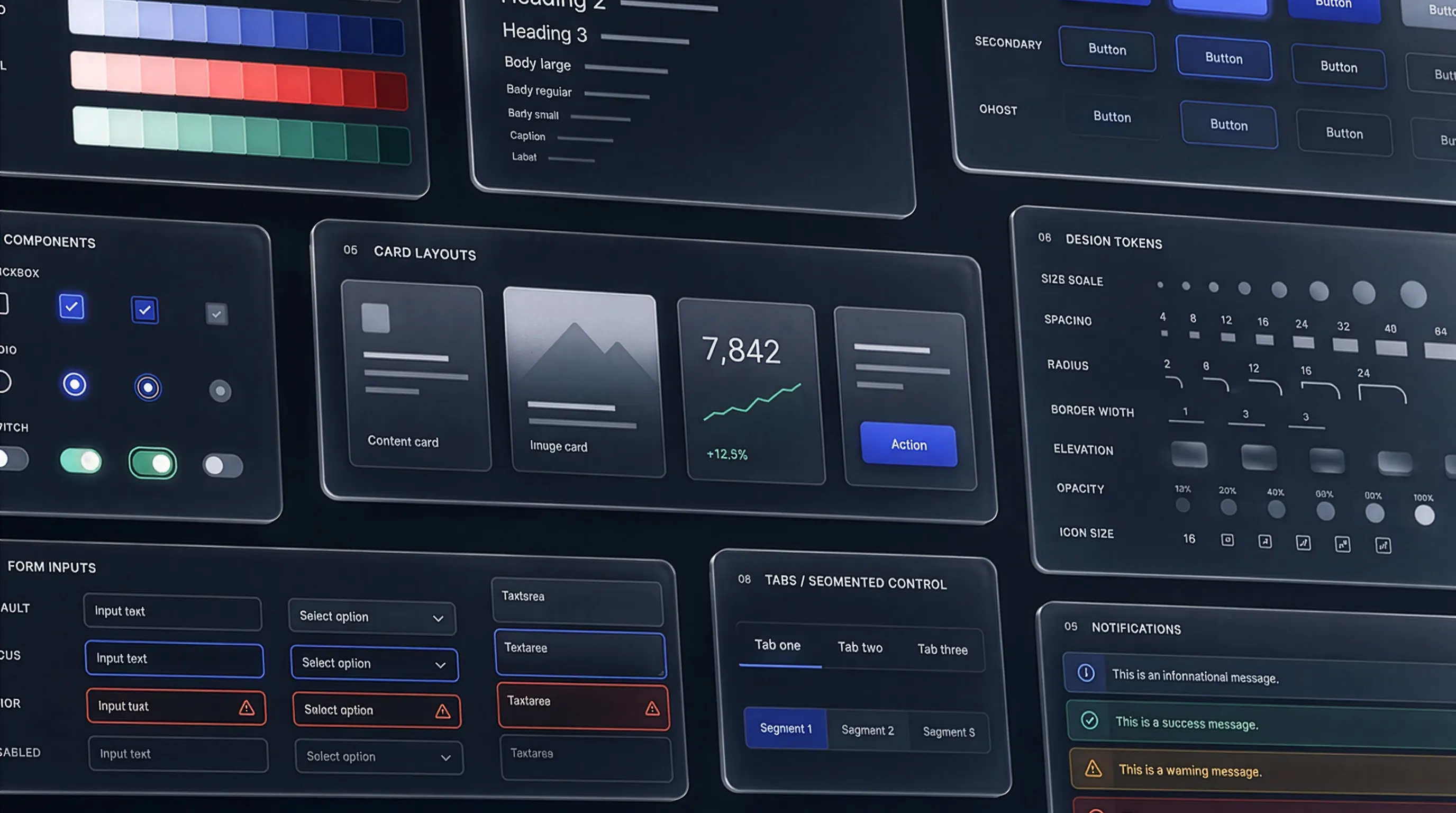
Design systems for industrial product families: a shared foundation across multiple products, teams, and platforms
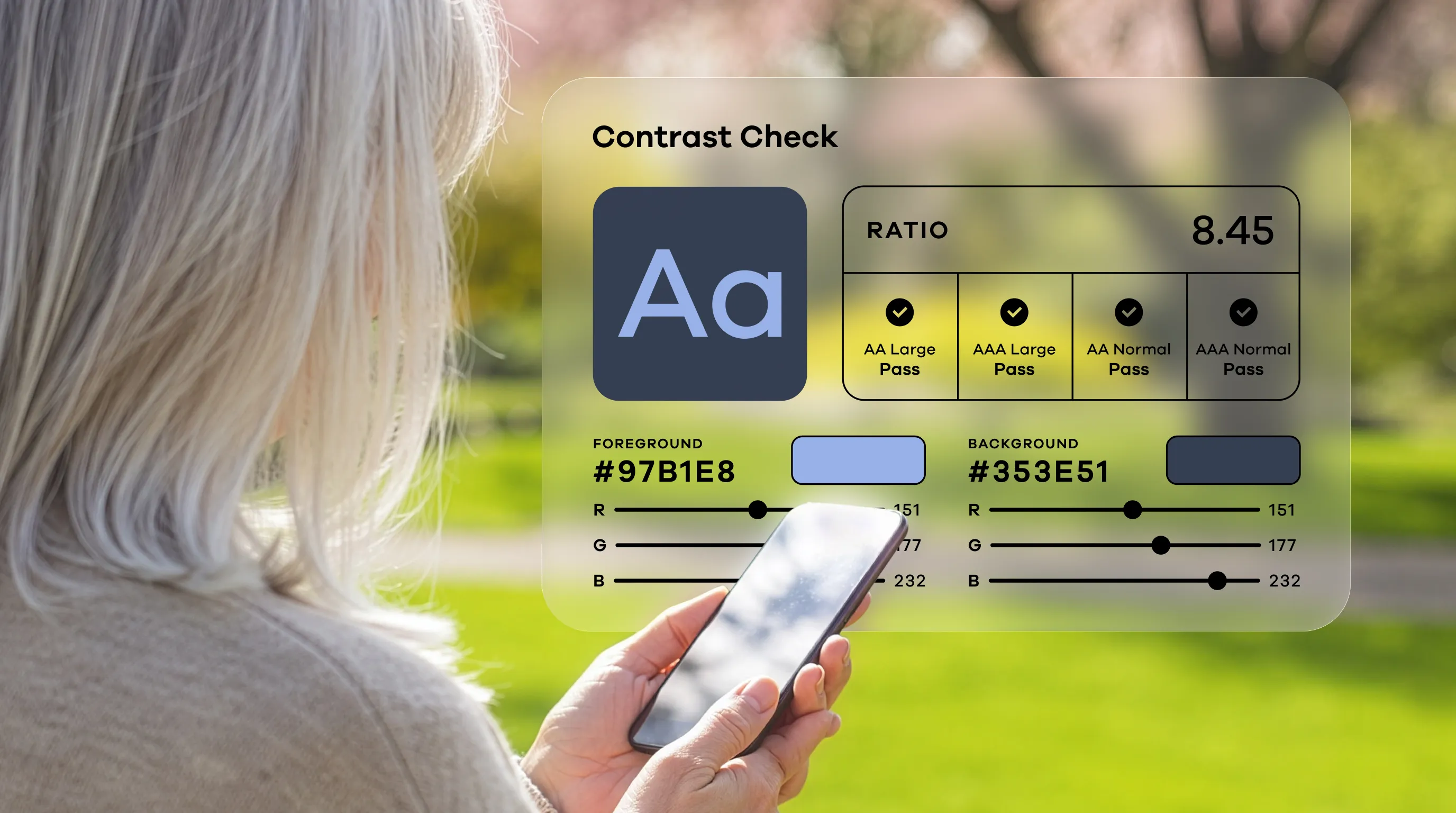
Accessibility in industrial systems: accessibility as quality, critical when users are operators in demanding environments
UX research and design strategy: for long product cycles and technically mature markets
We are based in Gothenburg, at the heart of one of Sweden's strongest industrial clusters, working closely with technology and product teams in industrial organisations, often located in Gothenburg and Western Sweden, where proximity and collaboration are key to how we work.
Our industrial experience
Our experience comes from long-term collaborations with established industrial companies such as Emerson, Autoliv, and Electrolux, where digital software is a core part of the product, for example configuration tools, monitoring solutions, and product-integrated interfaces that must remain reliable over long periods of time.
We are often brought in when products and systems have evolved over many years, resulting in interfaces and structures that no longer reflect current needs. Our role is to introduce clarity, structure, and shared principles that make systems easier to understand, develop, and maintain, without compromising safety or technical requirements.
Industry in transition
A new generation of operators, technicians, and engineers are entering industrial workplaces with different expectations from those who retired. Industrial markets have also reached a high level of technical maturity, and UX is moving from finish to function as hardware and performance become comparable across suppliers.
That doesn't mean consumer patterns can be scaled directly. Industrial UX has its own conditions — users are experts, systems are safety-critical, and accessibility overlaps with safety and operational reliability.
Want to read more about how this looks in practice? See our article Industry in transition – why UX matters (coming soon).
Deep dive: Emerson
Since 2021, we have partnered with Rosemount Tank Radar AB, part of Emerson, on user experience for their industrial software. The work spans product-integrated interfaces, configuration and monitoring tools, and the long-term development of shared principles for design and usability.
As part of the engagement, we built a design system for Emerson's industrial products. A variable-based foundation in Figma, documented in Supernova, now used as the platform for several software products within Rosemount Tank Radar AB.
How we work in industrial engagements
We work as an extension of our clients' teams, with a focus on long-term collaboration and trust. This is common in industrial projects with long lifecycles and complex dependencies:
Close collaboration with product owners, engineers, and development teams
Design decisions grounded in real user needs, not assumptions
A focus on sustainability, maintainability, and long-term quality
Tight integration between UX, design, and development — design and code share the backlog
What we offer
Industrial engagements vary more in scope than consumer projects: context studies take time, safety-critical validation requires care. Three common engagements:
UX strategy and pre-study for an industrial project (80–160 hours, approx. 80,000–160,000 SEK, 2–4 weeks): context study, stakeholder interviews, prioritised action plan, and high-fidelity concept for an industrial product or platform.
Design and evolution of an industrial interface (from 160 hours and up, from approx. 160,000 SEK, from 4 weeks): HMI, operator interface, embedded UI, or web-based configuration. We design and support implementation alongside your development team.
Design system for an industrial product family (from 320 hours, from approx. 320,000 SEK, from 8 weeks): shared foundation in Figma, component library, documentation, governance — for multiple products and teams. A longer engagement that often runs across six months or more.
For clients with multiple product teams or long product cycles, we often work in continuous monthly engagement rather than discrete projects. That continuity is valuable in a sector where context knowledge is decisive.
What does industrial UX cost?
An industrial UX engagement costs from approx. 80,000–160,000 SEK for a pre-study; design of an industrial interface from approx. 160,000 SEK and a design system for a product family from approx. 320,000 SEK. Everything is billed at 995 SEK/h (our best price, with Team retainer) — the packages above show hours and price.
AI in our work
AI tools are included in the rate. We use Claude, Cursor, and Codex to make all our work more efficient: in review work, design work, and code. It's our expertise working faster.
Common starting points
Three typical situations where a conversation with Intunio becomes relevant:
Modernise an HMI or industrial interface
The product has been around for a long time, the interface no longer reflects current needs, a new generation of operators is coming in. A pre-study maps the current state and points to the way forward.
Build an industrial design system
A shared foundation for embedded UI, configuration tools, and web-based applications, where multiple teams and platforms are currently working in parallel without coordination.
Web-based configuration or monitoring platform
Tools used alongside product-integrated interfaces, where clarity, stability, and performance are decisive.
In all three cases the starting point is the same: industrial systems deserve the same care for usability as consumer products — on industry's own terms.
Related content
Projects
Services
Insights
Frequently asked questions
Intunio is based in Gothenburg, on Korsgatan 24 in the city centre of one of Sweden's strongest industrial clusters. For industrial clients in Gothenburg and Western Sweden, proximity is an important part of the collaboration — site visits, workshops, and check-ins often happen on-site, which is particularly valuable in industrial engagements where the context has to be experienced directly. It also matches our model: we become an extension of your team over time, not an external supplier.
Yes. Intunio has had continuous engagements with industrial and technology companies in Sweden, Europe, and North America throughout our history. We have particular experience with clients in the US and Canada, so working across time zones is part of our normal rhythm. Design work, design system development, and UX research are mainly carried out from our office in Gothenburg, complemented by workshops and on-site visits where it's valuable — and in industrial engagements it often is, because the context needs to be experienced directly.
Users are experts, not consumers. Systems are often safety-critical. Product cycles are long (often 10+ years). The context can be demanding: time pressure, noise and movement, gloves, bright light, embedded hardware with limited screen space. Industrial UX is less about simplification and more about structuring complexity so it becomes manageable. Same fundamentals, different priorities.
Yes. We have experience designing for small displays, hybrid interactions (touch + buttons + status indicators), and interfaces tightly integrated with hardware. See the embedded UI service for more details, or the Emerson Design System case for a concrete example.
It depends on the number of products, number of teams, and whether there's existing material to build on. An initial foundation typically takes 8–12 weeks. Scaling out to multiple products and establishing governance is a longer engagement that runs across six months to a year. We often work in continuous collaboration since design systems are platforms, not one-off projects.
With great care for context studies, validation, and documentation. In safety-critical contexts, interviews aren't enough. Observation and field studies are needed to understand how the product is actually used in operation. Design decisions are documented with rationale so they can be reviewed and challenged. We work closely with engineering teams so that UX, safety, and technical requirements are balanced early, not at the end.
80–160 hours, approx. 80,000–160,000 SEK, calculated on the hourly rate of 995 SEK/h. It covers a context study, stakeholder interviews, a prioritised action plan, and a high-fidelity concept.
Design and evolution of an industrial interface starts from 160 hours, from approx. 160,000 SEK. A design system for an industrial product family starts from 320 hours, from approx. 320,000 SEK.
AI tools are included in the rate. We use Claude, Cursor, and Codex where they make the work better: in analysis, design system work, and code. In industrial engagements the value is often in iteration speed: faster knowledge synthesis, faster prototyping, faster documentation. It's expertise in industrial systems working faster, not AI replacing the expertise.
Intunio Gothenburg
Intunio is a design and development studio based in Gothenburg. We help companies create digital products, apps, and systems that are easy to use and built to last.
In industrial UX, we work with HMI, embedded UI, and design systems for safety-critical products, always focused on operator needs, technical requirements, and long-term operation.









Need help with your industrial interface?
Tell us about your product and your challenges, and we'll get back to you with a first assessment of the next step.