Service design in Gothenburg — the bigger picture behind the experience
Intunio designs the whole service — customer journeys, flows, systems, and processes — and builds the solution that holds it together.
Intunio is a design and development studio in Gothenburg. Service design is our perspective for the whole: how a service is created, delivered, and held together over time. We map the customer journey, design flows and touchpoints, and shape the systems and processes that make the service work. And because we also build the products, we carry out the change for real — in systems and in product.
What we do
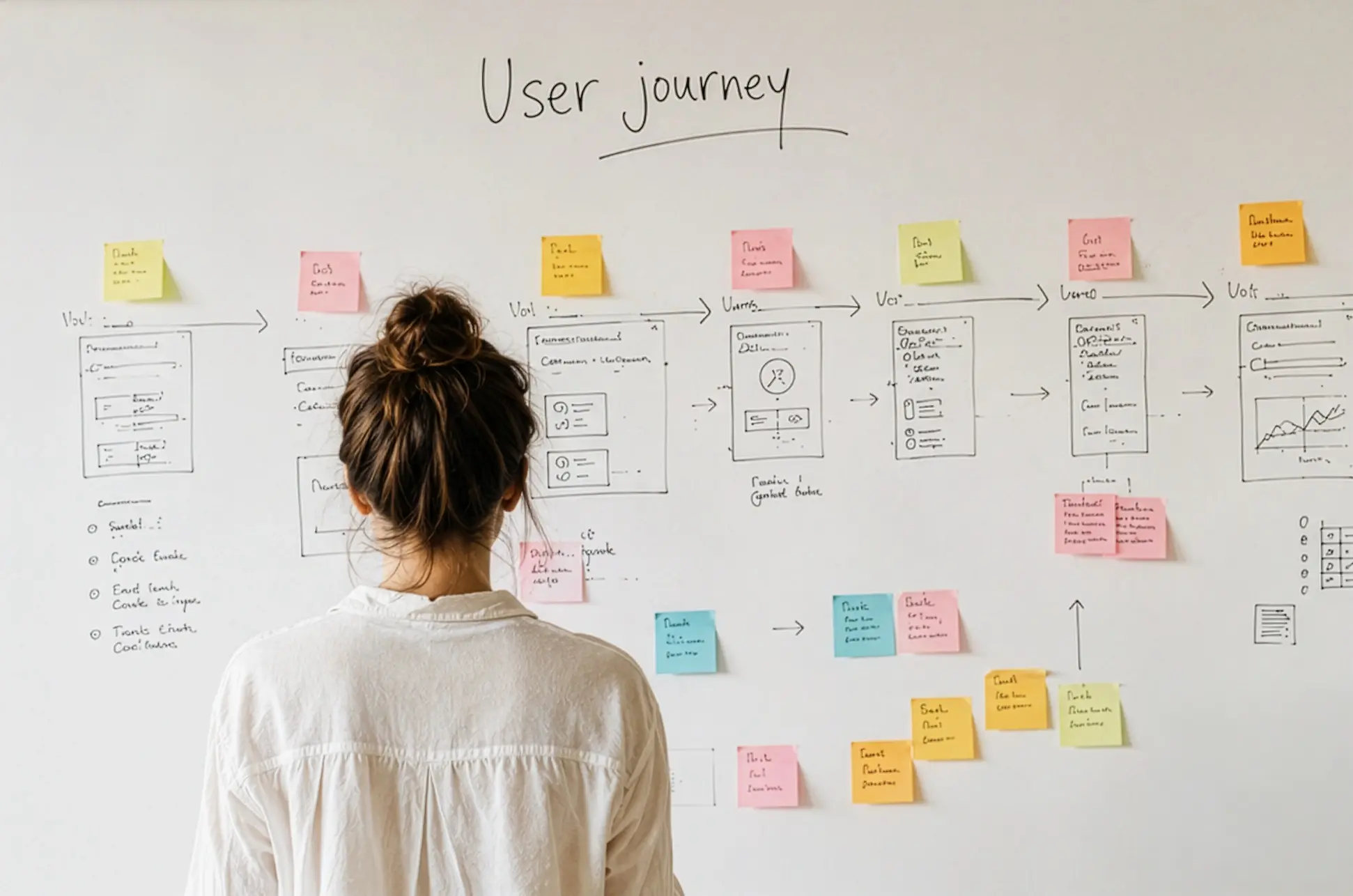
Customer journeys and journey mapping — we map the user's path through the service, step by step, and find where it breaks.
Service blueprints — we connect what the user meets (frontstage) to the processes, systems, and responsibilities behind it (backstage).
Touchpoints and flows — we design the moments and transitions where the service is decided: onboarding, hand-offs, support, return visits.
Workshops and prioritisation — we gather the team, find the gaps, and prioritise where the effort has the most impact.
Design and engineering — and then we build the solution, in the same team, so the change actually happens. See UX design and app development.
What is service design?
At its core, service design is about designing how a service works as a whole — not just how it's experienced in the use of a product, but how it's created, delivered, and held together over time.
UX design focuses on the user's direct interaction with a product: flows, interfaces, behaviours. Service design steps back and looks at the conditions behind the experience: What steps are needed for something to work? Who is responsible for what? Which systems and processes have to work together?
They aren't two competing disciplines. They're two perspectives on the same reality, at different levels — the experience in front, the structure behind. A useful way to think about it is to separate what's visible to the user (frontstage) from what happens behind the scenes (backstage): the processes, system support, and responsibilities that have to connect for the experience to work.
Common challenges we solve
When an experience breaks down, it's rarely because no one cares about the user. More often it's structural gaps. What we often see:
Products with good UX, but unclear hand-offs to onboarding or support.
Several systems that each work well, but together create friction.
Teams that optimise their own parts, without anyone owning the whole.
Support constantly compensating for gaps in processes or structure.
From the customer's perspective, it doesn't matter where the responsibility sits — the experience is felt as a single chain. Service design makes that chain someone's responsibility, and designs it deliberately.
We own the execution
This is the difference between us and a pure service or CX consultant. CX is often a language for ambition and direction — customer journeys, metrics, pain points — but a CX role rarely owns implementation, systems, or priorities in product development. That's why many initiatives get stuck on a map.
We work the other way around. Service design here isn't a deliverable handed over to someone else to build — design and engineering sit in the same team, so we can close the structural gaps for real: in the product, in the system support, and in the flows. It's service design that actually becomes reality.
What we've done
Service design shows up most clearly in cases where we designed the whole service, not just a screen:
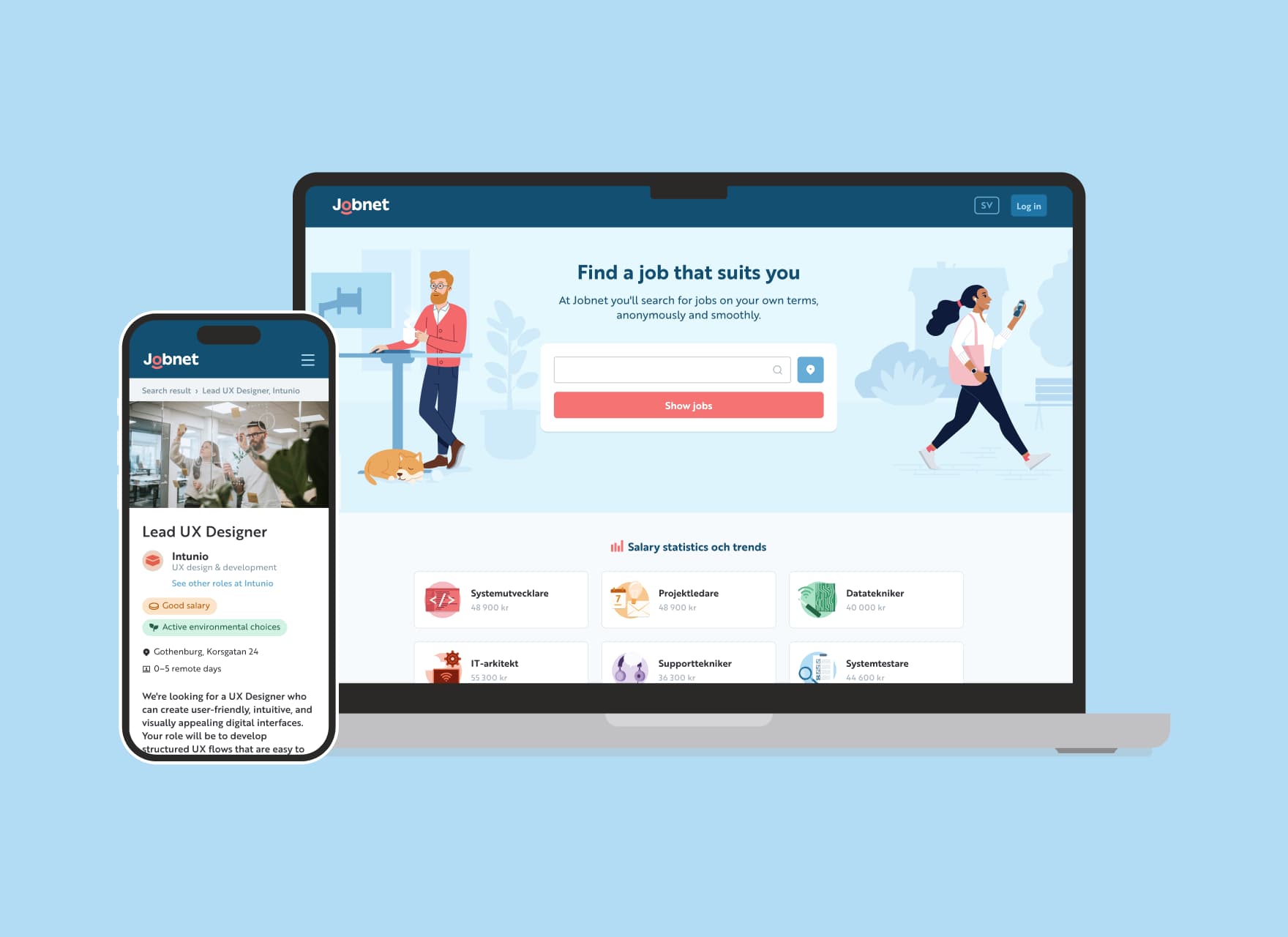
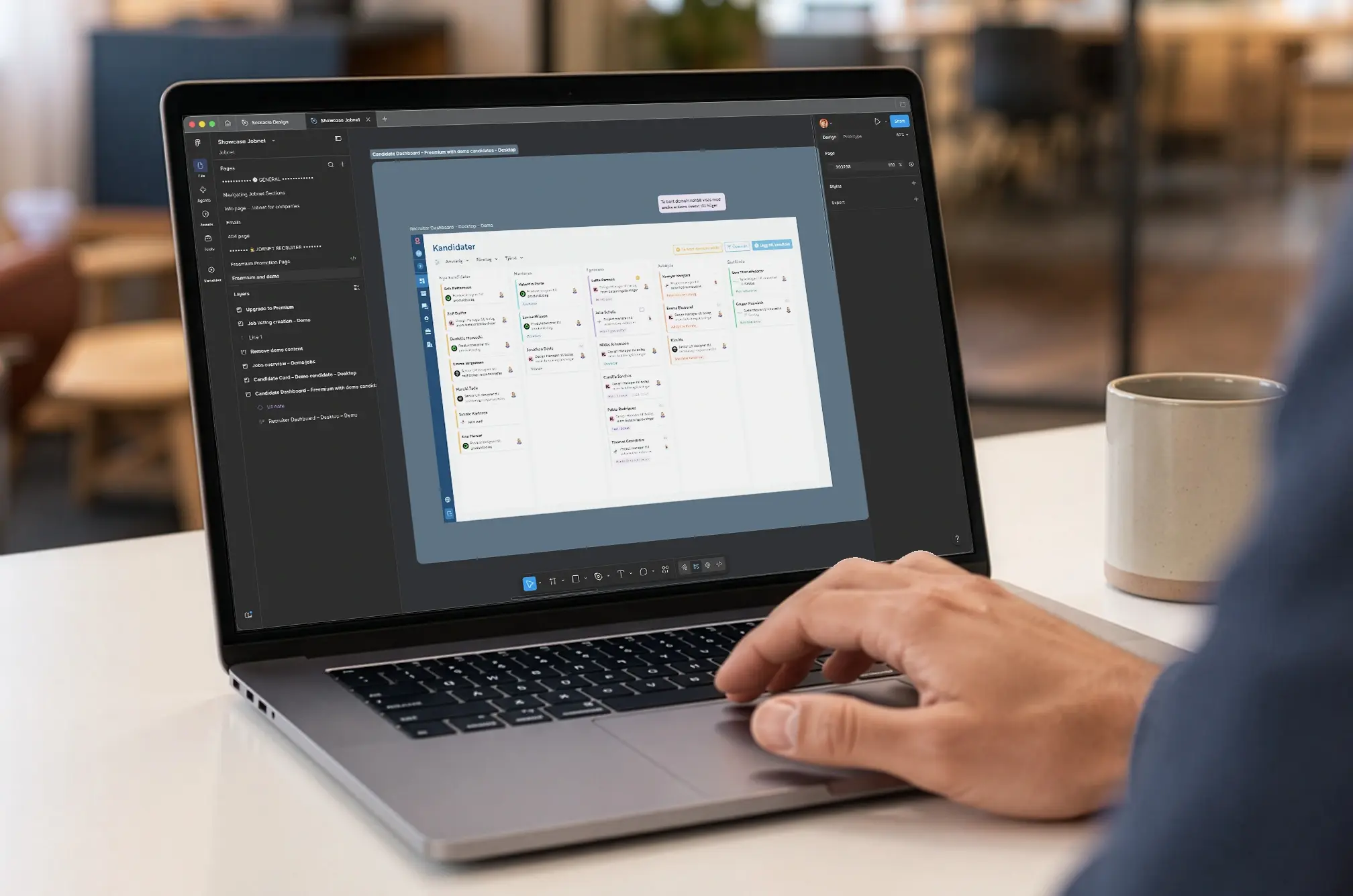
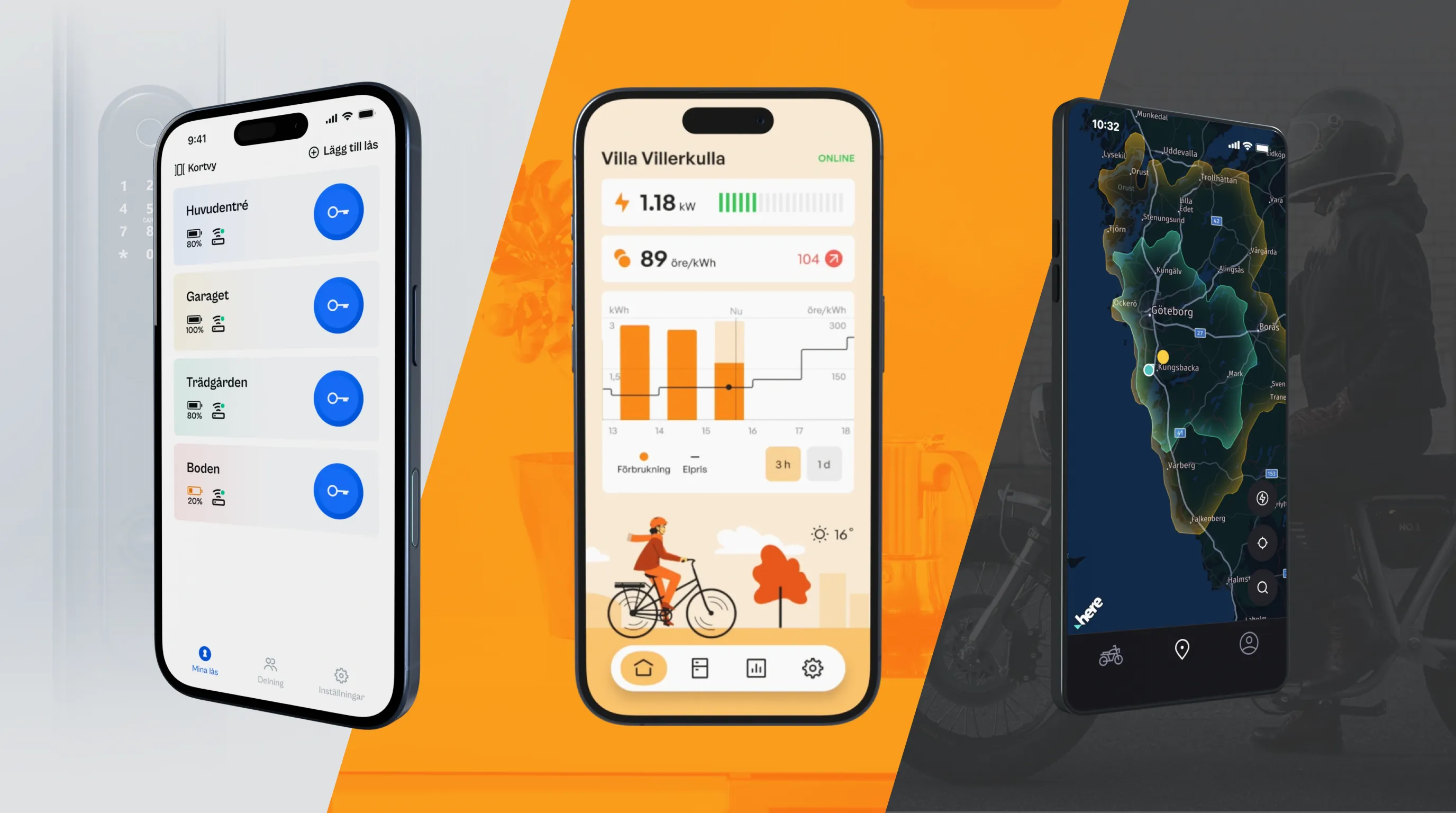
Jobnet — the whole recruitment journey within one platform: job ads, multi-channel publishing, application flow, an ATS for candidate management, and communication. Service design for when the entire process has to connect.
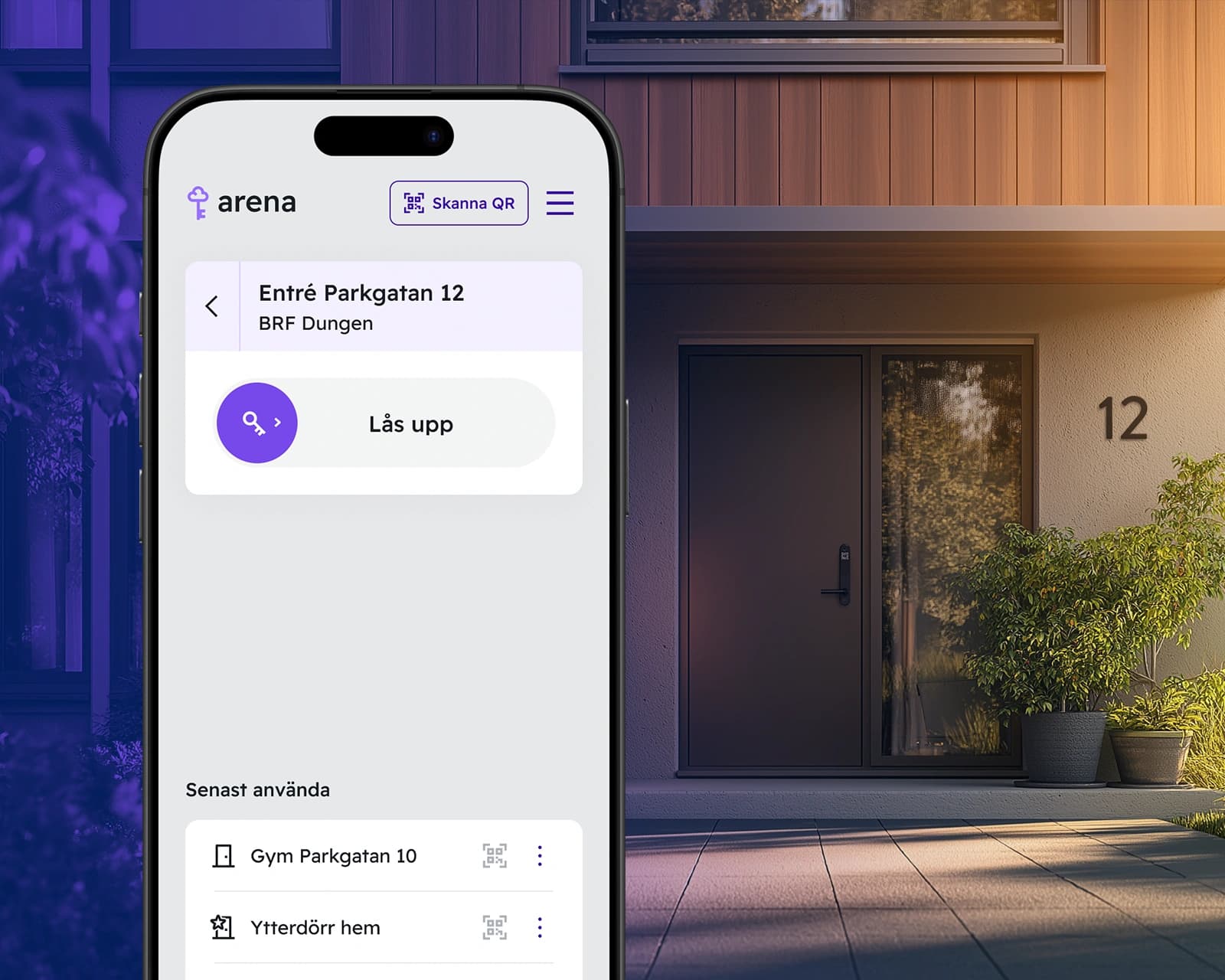
Arena — physical access management as a service: permissions, QR and smart locks, all in the browser without app installation. The whole chain from permission to unlocked door.
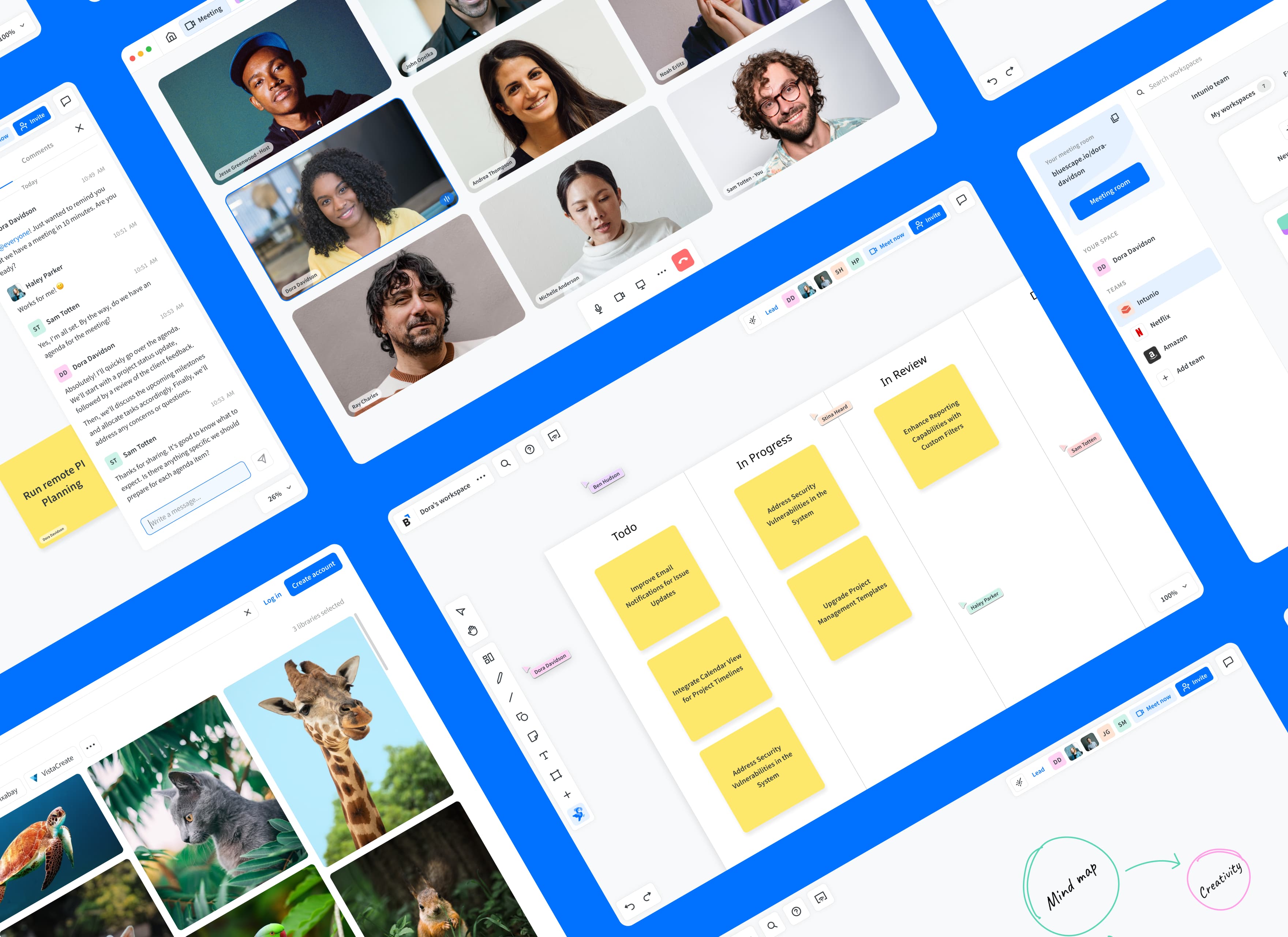
Bluescape — a collaboration platform used across large organisations, where we shaped how teams actually work together, not just individual views.
How we work
A service design engagement often starts by mapping the whole — the customer journey, frontstage and backstage, where the gaps are — ideally grounded in user research. From there we design both the experience and the structure behind it, and build the solution in the same team. For many clients it starts with a pre-study that lands where the effort has the most impact.
Service design and UX design go hand in hand here — one looks at the whole, the other at the interaction. And because we're also an engineering team, the decisions are buildable, not just strategic.
What does service design cost?
The hourly rate is 995 SEK/h (our best price, with Team retainer). AI tools (Claude, Cursor, Codex) are included in the rate. See the app development packages for hours and prices when the service design is built all the way.
Related content
Projects
Services

Insights
Frequently asked questions
Service design is about designing how a service works as a whole — not just how it's experienced in a single interface, but how it's created, delivered, and held together over time. It covers both what the user meets (frontstage) and the processes, systems, and responsibilities behind it (backstage). The goal is for the whole chain to connect, not just individual parts.
They're two perspectives on the same reality, at different levels. UX design focuses on the user's direct interaction with the product — flows, interfaces, behaviours. Service design steps back and designs the conditions behind it: the steps, systems, processes, and responsibilities that have to work together for the experience to function. The experience in front, the structure behind.
CX describes how a customer experiences an organisation over time — useful as a language for ambition and direction, but harder to put into practice, since CX roles rarely own implementation. Service design is more concrete: it designs and changes the actual steps, systems, and flows. With us, it also gets built, because design and engineering sit in the same team.
We build. That's the whole point of our service design — we own the execution. Design and engineering sit in the same team, so the structural gaps are closed for real in product and systems, not just on a customer-journey map. See app development.
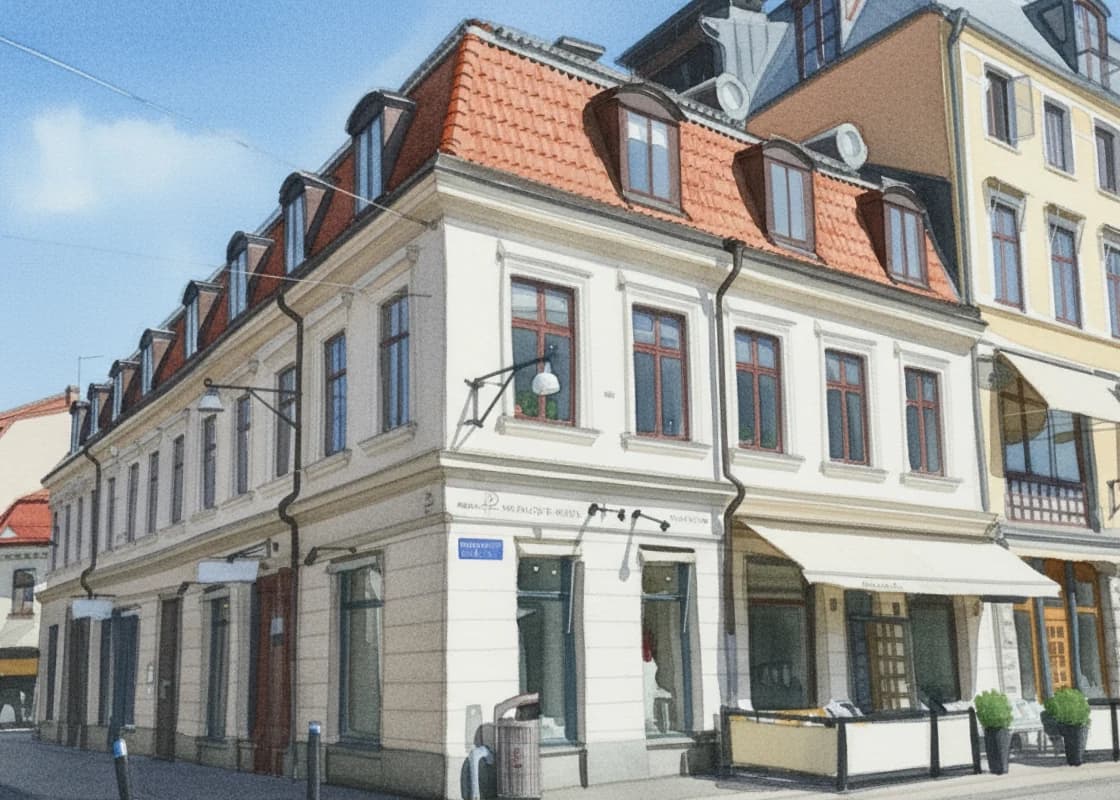
Yes. Intunio is based on Korsgatan 24 in central Gothenburg. Workshops and mapping often happen on-site at your place or ours. We also work with clients across Sweden, Europe, and North America.
Intunio Göteborg
Intunio is a design and development studio based in Gothenburg. We help companies create digital products, apps, and systems that are easy to use and built to last.


































Curious what we could do for you?
Get in touch with us at Intunio, and we'll take it from there.